

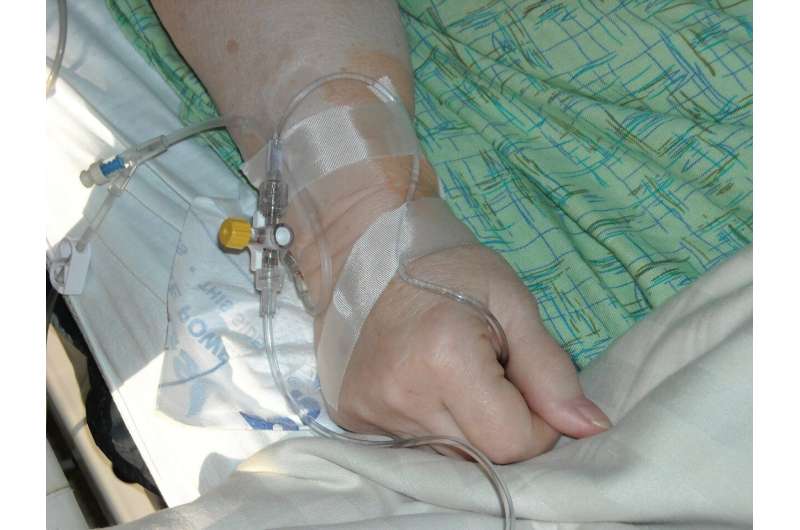
Dementia makes most things in life more difficult, including hospital care. Though often essential for patients with severe acute illness, hospital care can be confusing for persons with dementia (PWD). Compared with older adults without dementia, PWD in the United States visit the emergency room and are hospitalized at higher rates. In these cases, the decision on a hospital stay requires a delicate balance between the potential benefits and risks of hospital care.
Previous research has suggested that PWD who are admitted to the hospital have higher mortality rates and spend more days away from home in the following months than their non-admitted counterparts. However, one possible explanation is that the admitted patients are already in worse condition—in unmeasured ways—than their counterparts.
Intrigued by this conundrum, a team of researchers at Kyoto University and the University of California, Los Angeles, examined whether hospital admissions have a causal effect on health outcomes for persons with dementia and also investigated the effect on their subsequent health care spending.
“A key challenge in studying the effect of hospital admission is that sicker patients are more likely to be admitted, which can make admitted patients appear to have worse outcomes even if admission itself is not the cause,” says corresponding author Ryo Ikesu.

To address this bias, the team combined Medicare data with an instrumental variable approach. This involved the inference that emergency physicians differ in their propensity to admit patients and that the emergency physician assigned to a patient is essentially random, largely dependent on who is on shift.
To estimate the causal effects of hospital admission while removing the influence of patient severity, the researchers compared patients seen by physicians with a high tendency to admit with patients seen by physicians with a lower tendency to admit.
Ultimately, the team found no clear evidence that hospital admission affected 30- or 90-day mortality. However, compared with those who were not admitted, health care spending was about $2,500 higher for admitted patients 30 days after an emergency room visit, mainly because of home health care and nursing facility care.
This suggests that hospital admission may alter a patient’s care trajectory in a way that substantially increases downstream spending. The researchers found similar patterns for 90-day spending.
“Despite evidence suggesting decline in physical and cognitive function among older people after hospital care, we did not find evidence that hospital admission was associated with this decline among long-term nursing home residents with dementia, possibly due to the small sample size,” says Ikesu.
These findings do not indicate that hospital admission is inappropriate for persons with dementia, but rather highlight an opportunity to consider alternatives—such as home-based acute care or outpatient follow-up—for borderline cases in which the necessity of admission is uncertain.
Publication details
Effects of Hospital Admission on Health Outcomes and Health Care Spending Among Persons With Dementia, Annals of Internal Medicine (2026). DOI: 10.7326/ANNALS-25-03725
Journal information:
Annals of Internal Medicine
The content is provided for information purposes only.