

Advanced technologies are helping researchers identify environmental contaminants that could potentially be contributing to the rising incidence of early-onset colorectal cancer. However, epigenetic studies on such associations should be interpreted with caution, according to researchers at Dana-Farber Cancer Institute, who are leading experts in the disease.
New findings link pesticides and cancer
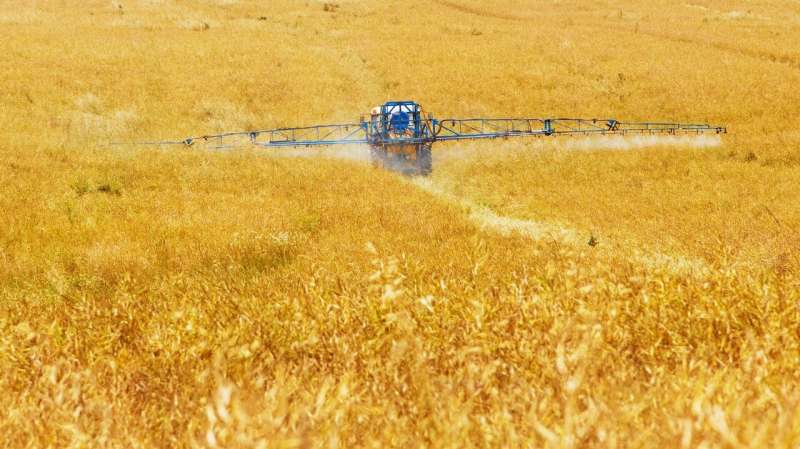
In a Perspective published in Nature Medicine, the authors comment on a study in the same issue, which found an association between early-onset colorectal cancer and exposure to certain pesticides, particularly an herbicide called picloram. The study was led by researchers at the Vall d’Hebron Institute of Oncology in Barcelona, Spain.
“There is something in our environment that is likely contributing to early-onset colorectal cancer, and we now have innovative tools and technologies to be able to study this in new ways,” says Dr. Kimmie Ng, director of the Young-Onset Colorectal Cancer Center at Dana-Farber and senior author of the Perspective piece. “But in order to conclude that something is a risk factor, we need proof of causality and a biological mechanism.”
Rising rates among younger adults
While the incidence of colorectal cancer has decreased in recent decades among older adults in Western countries with screening programs for colorectal cancer, it’s been on the rise among young adults under the age of 50.
Epidemiological studies have suggested a birth cohort effect, where individuals born in the 1960s and beyond, who share common lifestyle and environmental exposures, are experiencing progressively higher rates of the disease across successive generations.
How epigenetics connects environment and risk
Epigenetics is the study of how our environment modifies gene activity. Epigenetic analyses of the exposome, which is the totality of environmental exposures an individual has encountered from conception and across their lifetime, are offering new insights into potential links between environmental exposures and the risk of early-onset colorectal cancer.
In the Perspective paper, Drs. Ng, David J. Lee, and Sylvan C. Baca point out several caveats to the study, which analyzed molecular fingerprints, or patterns of genomic modifications in response to environmental factors, and their association with early-onset colorectal cancer. Dr. Lee is a Hematology/Oncology Fellow at Dana-Farber. Dr. Baca is a medical oncologist at Dana-Farber.
Key caveats and study limitations
Dr. Ng notes that the study relied on self-reported data on pesticide use, which may not be accurate. In addition, the population studied was restricted to male individuals of European ancestry, which could make the results less generalizable to the broader population.
Finally, it’s difficult to measure exposure to pesticides, such as the timing of the exposure, the duration of the exposure, and how the exposure relates to the molecular fingerprints observed.
Looking ahead to stronger evidence
“Many unknowns remain about whether and how picloram actually causes early-onset colorectal cancer,” said Dr. Lee, first author of the Perspective piece.
“We are many steps removed from confirming that this is a risk factor for colorectal cancer, but I think what is novel and interesting is the approach the authors took to assess for various environmental exposures in patients with colorectal cancer.”
Despite the study’s limitations, Dr. Ng and her co-authors say that it offers optimism that new epigenetic approaches, such as molecular fingerprinting, can help uncover new risk factors for early-onset colorectal cancer and help guide strategies for prevention.
Publication details
Uncovering risk factors in the exposome for early-onset colorectal cancer, Nature Medicine (2026). DOI: 10.1038/s41591-026-04369-8
Journal information:
Nature Medicine
Key medical concepts
The content is provided for information purposes only.