

How the Body Language of the Contrapposto Pose shows the Art of Balance and Expression
Introduction
The contrapposto pose, originating in ancient Greek sculpture, is one of the most iconic stances in classical art. Often associated with the human figure depicted in a relaxed yet dynamic way, this pose has become a symbol of grace, balance, and naturalism. But beyond its aesthetic beauty, the contrapposto pose carries deeper meanings that reflect how the human body communicates emotions, states of mind, and even broader cultural ideals.
When we think of contrapposto, we likely imagine famous sculptures like Michelangelo’s David or The Doryphoros by Polykleitos, where the figures stand with one leg bearing most of the weight, while the other leg is relaxed, creating an elegant s-curve in the body. This seemingly simple posture is not just about how a figure stands but also about how it embodies the essence of human movement, tension, and relaxation.
we will explore the body language of the contrapposto pose, discussing how it communicates balance, emotion, and physical presence. We will also delve into how artists use this pose to enhance the realism and narrative power of their work, and how it reflects the human condition in both historical and modern contexts.
What Is the Contrapposto Pose?
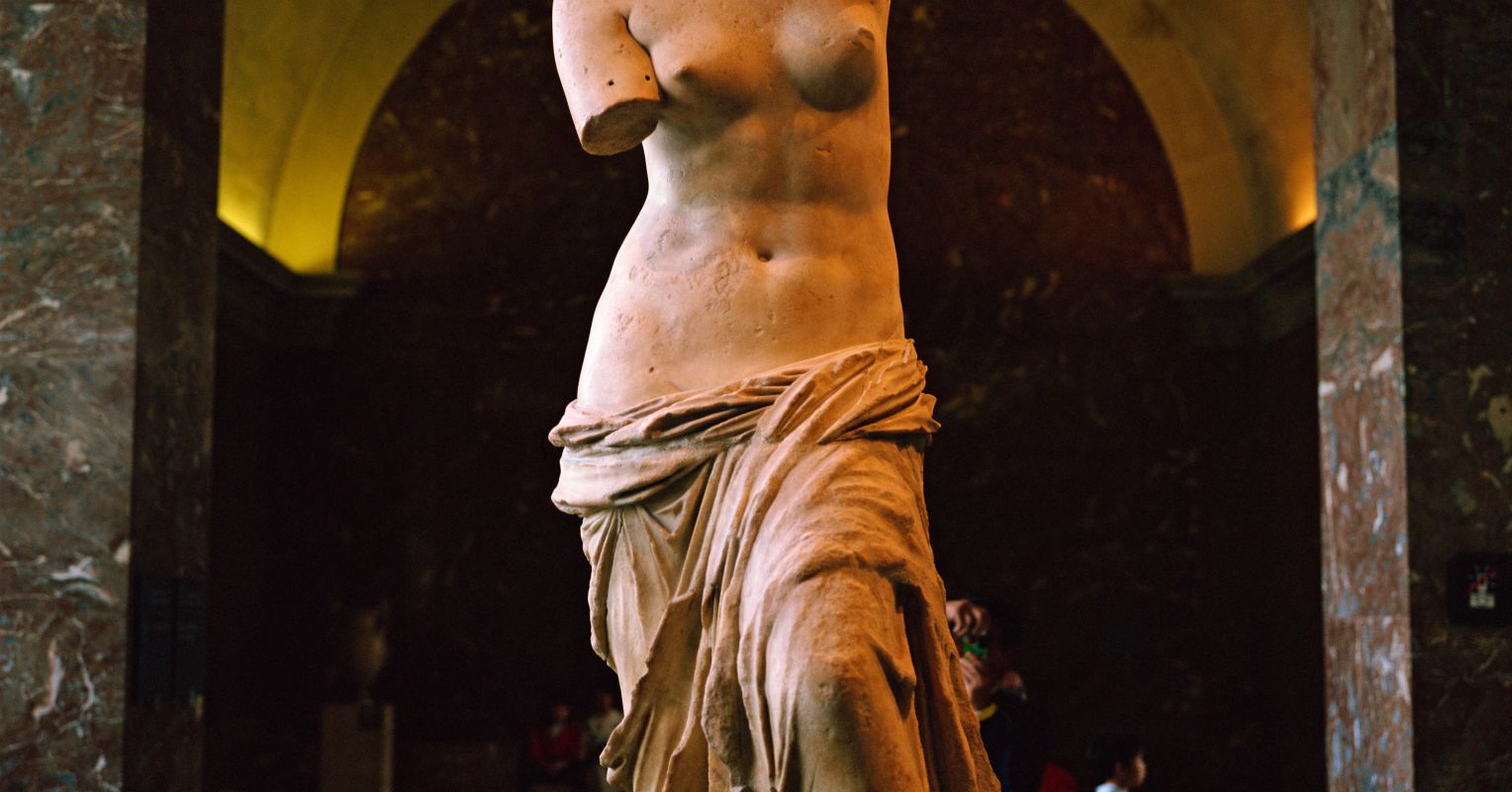
The term “contrapposto” comes from the Italian word for “counterpose” and refers to the way the figure’s weight is shifted onto one leg, causing the rest of the body to naturally follow in a subtle twist. This dynamic stance results in a sense of movement and balance, which contrasts with the more rigid, frontal poses seen in earlier art, such as those of Egyptian statues or archaic Greek figures.
In a typical contrapposto pose, the weight-bearing leg is positioned with the knee slightly bent, while the other leg is relaxed and slightly raised, causing the pelvis to tilt. This shift in weight creates a hip and torso rotation, which produces a graceful curve known as the s-curve. The shoulders and hips tend to be at slight angles to one another, contributing to a more natural, human-like posture.
While the contrapposto pose is often seen in sculpture, it also has applications in painting and photography, where the artist or photographer may position the subject to convey the same sense of balance and movement.
The Psychological Power of Contrapposto
The body language expressed in the contrapposto pose communicates much more than a relaxed stance; it represents confidence, self-awareness, and even emotion. The way the body moves and shifts its weight reveals the underlying mental state of the figure. A contrapposto figure often appears both poised and at ease, conveying a sense of controlled energy—an active stillness.
In art, this pose is often used to express a transition between action and rest, a point where the figure is neither static nor fully in motion, but in a moment of suspension. The figure seems to hold an internal tension, with the balance of weight on one leg, while the other leg rests in an open, slightly extended position. This subtle tension between the two halves of the body gives the figure a sense of life—a quality that engages the viewer both visually and emotionally.
Contrapposto and the Representation of the Human Form
The contrapposto pose is rooted in the desire for naturalism in representing the human body. Early Greek artists used this pose to convey the idealized human figure, reflecting the physical prowess and beauty of gods, athletes, and heroes. But even in these idealized forms, the body’s natural movements and posture were emphasized, highlighting the underlying biomechanics that shape how the body moves.
In this context, contrapposto is more than just a stylized pose—it represents an attempt to capture humanity in motion, suggesting the possibility of action even in moments of apparent stillness. This alignment of body parts—legs, torso, head—speaks to how we, as human beings, express ourselves even in stillness. The shift in weight and the dynamic curve create a sense of individuality in each figure, as no two contrapposto poses are ever identical, making each figure unique in its expression of life.
The Symbolism of the Contrapposto Pose
Beyond the technical execution of the pose, the contrapposto stance also carries significant symbolic meaning. Artists often use this pose to convey a range of emotional states and concepts:
1. Confidence and Authority
The contrapposto pose often communicates a sense of self-assuredness. This is particularly true when it is used to represent rulers, gods, or heroes. The stance shows that the figure is in control, standing with a kind of poised relaxation that projects power and balance. In contrast to the more rigid poses of earlier artistic periods, contrapposto suggests an individual who is comfortable in their own skin, confident in their identity and presence.
2. Relaxation and Comfort
When used in more informal or private settings—such as portraiture—contrapposto can also suggest relaxed confidence. Figures in these poses seem less concerned with external pressures and more engaged with their own inner world. The natural, flowing lines of the body evoke a sense of ease and emotional comfort.
3. Balance and Harmony
Contrapposto is also a representation of balance—physically and metaphorically. The pose depicts the equilibrium between weight and rest, tension and relaxation, reflecting the dual nature of existence. It is a reminder of the inner balance we must strike between opposing forces, both within our bodies and in our emotional lives. The pose serves as a visual metaphor for harmony.
4. Humanism and Individual Expression
In the Renaissance, the revival of classical art brought with it an emphasis on humanism—the belief in the dignity, worth, and potential of the human being. The contrapposto pose, with its focus on the human body and its expressive possibilities, became a symbol of the individual and human potential. By portraying the figure in this dynamic yet relaxed posture, artists were celebrating the human form as capable of beauty, grace, and complexity.
Contrapposto in Modern Art and Photography
Though contrapposto originated in ancient sculpture, its influence can still be seen today in modern art, photography, and fashion. In contemporary portrait photography, for example, the contrapposto pose can be used to convey a sense of both confidence and casualness, as subjects shift their weight slightly to one side, often with one hand on their hip or their head tilted, creating that classic “contrapposto” curve. Fashion designers also use the principles of contrapposto in their runway shows to highlight the movement of clothing on the body.
Even in film and theater, characters are often directed to adopt a contrapposto stance to convey relaxed authority or to make a scene feel more naturalistic. The pose is frequently seen in character-driven films to show that a character is grounded, powerful, and in control of their environment.
Conclusion
The contrapposto pose is much more than an iconic sculptural technique—it is a rich language of body expression that communicates balance, confidence, and humanity. From ancient Greek statues to Renaissance masterpieces, and even in today’s art, photography, and fashion, the contrapposto pose remains a powerful visual tool that speaks to the human condition. Whether it conveys the tension between action and rest, or the poise of a ruler or a relaxed moment of self-awareness, the body language of the contrapposto pose continues to captivate and communicate deep layers of meaning.
By understanding the nuances of the contrapposto pose, we can gain greater insight into how the human form speaks volumes without saying a word, subtly conveying a range of emotions, from strength and power to ease and serenity.
Anthony. (2011, August 17). Why Rounded Corners Are Easier on the Eyes. UX Movement. uxmovement.com/thinking/why-rounded-corners-are-easier-on-the-eyes/
Bottomley, I. (2021, July 26). How Cosmetic Procedures Can Address Body Asymmetries | The AEDITION. Aedit.com | Aesthetic Edit; AEDIT. https://aedit.com/aedition/cosmetic-procedures-for-body-asymmetries
Butkowski, C. P., & Tajima, A. (2017). A critical examination of visualized femininity: selective inheritance and intensification of gender posing from historical painting to contemporary advertising. Feminist Media Studies, 17(6), 1037-1055. https://doi.org/10.1080/14680777.2017.1300830
Del Zotto, M., Framorando, D., & Pegna, A. (2018). Waist-to-hip ratio affects female body attractiveness and modulates early brain responses. The European Journal of Neuroscience, doi:10.1111/ejn.14209
Dulebohn, J., Bommer, W., Liden, R., Brouer, R., & Ferris, G. (2012). A meta-analysis of antecedents and consequences of leader-member exchange- Integrating the past with an eye towards the future. Journal of Management, 38, 1715-1759.
Janssen, O., & Van Yperen, N. (2004). Employees’ goal orientations, the quality of leader-member exchange, and the outcomes of job performance, and job satisfaction. Academy of Management Journal, 47, 368-384.
Jirsa, P. (2024, September 14). The Reason Why The Camera Adds 10 Pounds. SLR Lounge. slrlounge.com/the-reason-why-the-camera-adds-10-pounds-minute-photography/
Komaiko, L. (2019, June 10). When women take group photos, why do they line up like Rockettes? Chicago Tribune.
Lannutti, P., Laliker, M., & Hale, J. (2001). Violations of expectations and social-sexual communication in student-professor interactions. Communication Education, 50, 69-82.
Mautz, B., Wong, B., Peters, R., & Jennions, M. (2013). Penis size interacts with body shape and height to influence male attractiveness. Proceedings of the National Academy of Sciences of the United States of America, 110(17), 6925-6930. doi:10.1073/pnas.1219361110
Pazhoohi, F., Arantes, J., Kingstone, A., & Pinal, D. (2020a). Becoming sexy: Contrapposto pose increases attractiveness ratings and modulates observers’ brain activity. Biological Psychology, 151, 107842–107842. https://doi.org/10.1016/j.biopsycho.2020.107842
Pazhoohi, F., Jacobs, O. L., & Kingstone, A. (2024). Gaze Preferences to Male Contrapposto and Non-Contrapposto Postures. Empirical Studies of the Arts. https://doi.org/10.1177/02762374241268424
Pazhoohi, F., Macedo, A. F., Doyle, J. F., & Arantes, J. (2020b). Waist-to-Hip Ratio as Supernormal Stimuli: Effect of Contrapposto Pose and Viewing Angle. Archives of Sexual Behavior, 49(3), 837-847. https://doi.org/10.1007/s10508-019-01486-z
Sidari, M., Lee, A., Murphy, S., Sherlock, J., Dixson, B., & Zietsch, B. (2021). Preferences for Sexually Dimorphic Body Characteristics Revealed in a Large
Sample of Speed Daters. Social Psychological & Personality Science, 12(2), 225–236. https://doi.org/10.1177/1948550619882925
The Getty. (2023, August 10). FAAQ #6 – What is Contrapposto? YouTube. https://www.youtube.com/watch?v=pJjRYLjwyGU
Three Posing Tips Everyone Needs to Follow. (2017, April 12). Aarontaylorphoto. aarontaylorphoto.com/post/2017/04/12/3-posing-tips-everyone-needs-to-follow
Yuan, F., & Woodman, R. (2010). Innovative behavior in the workplace: The role of performance and image outcome expectations. Academy of management Journal, 53, 323-342.
#Body #Language #Contrapposto #Pose
Feel free to check related posts