

Do you know Horse Sports: High Risk, Low Control in 2024
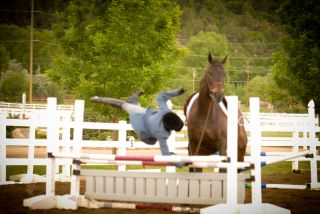
Many horses outweigh their riders by well over a thousand pounds; one quick move can spell trouble.
Source: Janet Jones
Horse sports are high risk, something more riders, trainers, and parents need to understand. To make matters worse, they are low in control. Equestrians work with prey animals who are skittish, agile, super-fast, and huge. The average horse weighs 1,200 pounds, more than a concert grand piano that’s nine feet long. Even well-trained horses can—and do—become hysterical in a heartbeat, and for reasons most people would never notice.
The chances of landing in a hospital are higher for equestrians than for motorcyclists, skiers, or football players. On average, motorcyclists are injured seriously once in every 7,000 hours of riding. The average rate of serious injury for equestrians is once every 350 hours. In other words, horseback riding is 20 times more dangerous than motorcycle riding. And the number one cause of sports-related traumatic brain injuries? Yep, you guessed it: horseback riding.
One of the reasons for the high injury and death rate in working with horses is lack of control, something we don’t often consider when evaluating risk. When you jump off a cliff fastened to a bungee cord, for example, you have tremendous control. You can watch other people of various heights and weights jump from the same location on the same length cord in the same weather with the same instructions. You can check all the carabiners, look for fraying ropes, and time your jump to your own preference.
These observations allow you to predict your own trajectory in advance, evaluate the safety of the equipment, address in advance any idiosyncrasies of location or weather, and take a deep breath before flinging yourself into thin air. While waiting your turn, you can even Google the statistics on your phone and discover that only 1 in 500,000 people die while bungee jumping. In horse sports, 50 in every 500,000 die.
The trouble—and the intense pleasure—with horses is that the “equipment” has a mind of its own. All animals are unpredictable, but prey species are especially so. And 1,200 pounds of skittish, unpredictable muscle is grounds for pause. People fret about falling off, but that should be the least of their worries. Excellent lifelong riders can get bucked or spun off with the force of a ballistic missile hurled into the dirt. Horses sometimes panic and bolt, running blind at 40 miles per hour through buildings and forests full of obstacles above their heads, but not above yours. Every equestrian’s nightmare is to get a foot caught in the stirrup and be dragged while four hooves pummel our torso.
The chances of equestrian injury or death are far greater from the ground, where we can be stepped on, trampled, squeezed, bitten, kicked, struck with a foreleg, crushed, or knocked down by an animal whose brain has no capacity for evaluating consequence or feeling regret. She’s not hurting you on purpose; she’s big and scared, and your body just happens to be in the way.
These events happen instantly, with no warning and no opportunity for control. We can’t watch other people do exactly the same thing with the same horse that we plan to do, because horses detect the slightest difference in behavior between one person and the next. They can smell cortisol and adrenaline in our sweat, knowing whether we are fearful. If we are, the horse’s mind tells her that she should be fearful, too. Once both parties are afraid, accidents worsen.
In any activity that is high risk with low control, mastery is critical. We can wear helmets and air vests, check our tack for safety, select well-trained horses, and ride on soft sand. But it takes years of instruction and practice to stay out of harm’s way near horses—and even the most skilled and careful of us still get hurt. Too many people inside and outside the equine industry simply do not understand the need for horse safety. They place themselves, their horses, and all the rest of us at greater risk by downplaying the basic rules.
One of the reasons people don’t take necessary precautions around horses is that we see animals as similar to us. A giant rogue wave in the ocean isn’t like us; Mount Everest above base camp doesn’t smack of a comfy human living room; bungee jumping off the highest bridge in the world feels foreign.
But riding a horse? Well, a horse has a face and a body, like we do. He has eyes and ears, kind of similar to ours. He has a voice and equine friends, he’s playful and warm, he walks and runs, works and rests, eats and sleeps just like us. He has a mind—and too many people assume it resembles a human mind. So there’s a psychological force that causes us to trust unknown horses more than we should, especially when we don’t know much about handling them. Keeping that psychological force at bay can be important for your health.
#Horse #Sports #High #Risk #Control
Feel free to check related posts