

Do you know: Mirikizumab proves safe and effective in treating Crohn’s disease in Phase III trial in 2024
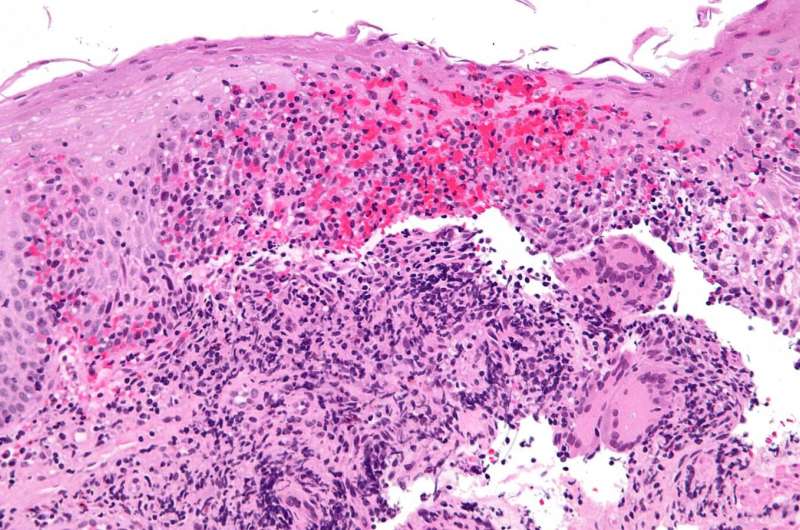
Results of a Phase III study conducted by an international team of researchers reveal that mirikizumab is more effective and has a favorable safety profile with fewer serious adverse events compared to a placebo for individuals suffering from moderately to severely active Crohn’s disease.
Crohn’s disease is a chronic, progressive inflammatory bowel condition characterized by inflammation that affects all layers of the intestinal wall, potentially leading to irreversible bowel damage and disability. This can lead to irreversible bowel damage and disability.
Current treatments often fail to achieve sustained symptom control and mucosal healing. Previous studies identified interleukin-23 as a critical cytokine in the disease’s pathogenesis, making it a potential target for new therapeutic interventions.
In the study, “Efficacy and safety of mirikizumab in patients with moderately-to-severely active Crohn’s disease: A phase 3, multicentre, randomised, double-blind, placebo-controlled and active-controlled, treat-through study,” published online in The Lancet, researchers enrolled 1,150 adult patients across 324 sites in 33 countries who had shown intolerance or inadequate response to at least one approved biological or conventional therapy. Participants were randomly assigned to receive mirikizumab, ustekinumab, or a placebo.
Mirikizumab is an engineered monoclonal antibody already approved for treating ulcerative colitis. Mirikizumab targets and inhibits the p19 subunit of interleukin-23 with a downstream effect that researchers hope will silence the pathway of inflammation associated with Crohn’s disease.
Coprimary endpoints evaluated the superiority of mirikizumab over placebo by assessing patient-reported clinical response at week 12 combined with either endoscopic response or clinical remission by the Crohn’s Disease Activity Index (CDAI) at week 52.
Results revealed that 38.0% of patients receiving mirikizumab achieved the combined endpoint of clinical response at week 12 and endoscopic response at week 52, compared to 9.0% in the placebo group. Additionally, 45.4% of the mirikizumab group reached clinical remission by the CDAI at week 52 versus 19.6% for placebo.
When compared to ustekinumab in achieving clinical remission at week 52, 54.1% of mirikizumab patients reached remission compared to 48.4% for ustekinumab. In the endoscopic response at week 52, 48.4% of mirikizumab patients versus 46.3% of ustekinumab patients met this endpoint.
Incidence of adverse events and discontinuations were lower in the mirikizumab group compared to placebo. Serious adverse events occurred in 10.3% of patients on mirikizumab, 10.7% on ustekinumab, and 17.1% on placebo. The safety profile of mirikizumab was consistent with previous findings, indicating a favorable benefit-risk ratio for its use in treating active Crohn’s disease.
The trial results indicate that mirikizumab can address unmet medical needs by providing more durable and effective treatment options. The ability of mirikizumab to maintain clinical remission and reduce inflammation over 52 weeks is highly encouraging for its potential role in improving the quality of life for individuals battling Crohn’s disease.
More information:
Marc Ferrante et al, Efficacy and safety of mirikizumab in patients with moderately-to-severely active Crohn’s disease: a phase 3, multicentre, randomised, double-blind, placebo-controlled and active-controlled, treat-through study, The Lancet (2024). DOI: 10.1016/S0140-6736(24)01762-8
Thomas P Chapman et al, Expanding therapeutic options in Crohn’s disease, The Lancet (2024). DOI: 10.1016/S0140-6736(24)01937-8
© 2024
Citation:
Mirikizumab proves safe and effective in treating Crohn’s disease in Phase III trial (2024, December 2)
2 December 2024
mirikizumab-safe-effective-crohn-disease.html
.
. The content is provided for information purposes only.