

In the United States, significant numbers of adults with dementia require long-term care services. For example, around 750,000 people who live in nursing homes have a diagnosis of dementia. However, transportation insecurity for this population has not received sufficient attention. Although long-term care facilities provide basic medical services, residents with dementia often need external, preventative, and follow-up care such as specialist visits, diagnostics, and dental or vision services. Without reliable nonemergency medical transportation, these needs may go unmet.
To demonstrate the extent of this problem, Postdoctoral Research Scientist Soojeong Han, Ph.D., and her colleagues reviewed existing literature on non-emergency medical transportation services for individuals with dementia living in long-term care (LTC) facilities. The study, “Transportation Services in Society for Individuals Living With Dementia in Long-Term Care Facilities: A Scoping Review,” was published in the Journal of the American Medical Directors Association.
Their review found only five publications that mentioned this topic, and even then, only briefly. Across these studies, caregivers, health care professionals, and people with dementia consistently described nonemergency medical transportation as a critical need. Reported barriers included financial strain, rural-urban disparities, lack of continuity among transportation vendors, and dementia-specific challenges such as cognitive decline, stigma, and the need for caregiver accompaniment.
The authors call for development of research on dementia-friendly transportation systems and interventions that prioritize accessibility, affordability, and adaptability, which could reduce social isolation, improve continuity of care, and enhance quality of life for LTC residents living with dementia.
A feasible path to spotting financial and social hardship in childhood cancer care
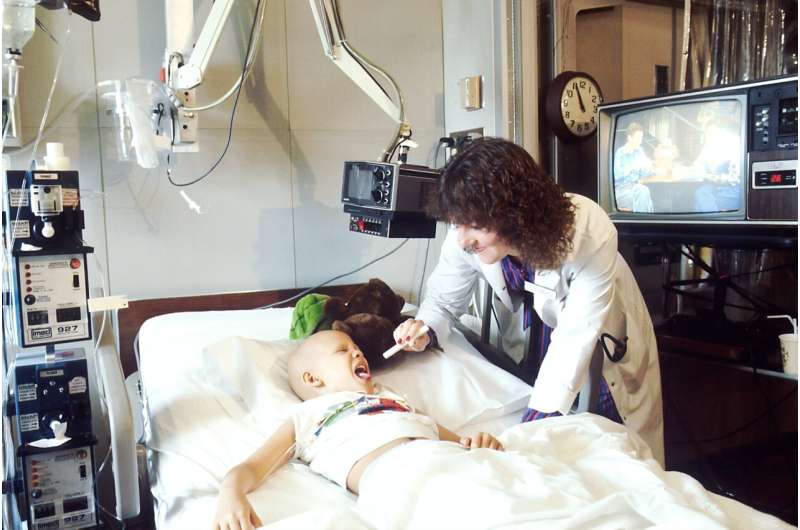
Screening for financial hardship in pediatric oncology settings is feasible using a multipronged approach, a Columbia University School of Nursing study led by Assistant Professor Melissa Beauchemin, Ph.D., reports. The study, “Prevalence of Financial Hardship and Health-Related Social Needs in Pediatric Oncology: A Practice-Level Analysis of Systematic Screening,” was published in Pediatric Blood & Cancer.
According to the paper, despite continued advances in the treatment of childhood cancer, disparities in outcomes among low-income and minoritized groups, specifically Black and Hispanic patients, persist. Financial hardship and health-related social needs (HRSN), such as lack of stable housing and transportation, can reduce a patient and family’s ability to access and receive the recommended cancer treatment.
As a solution, the researchers suggest implementing a screening mechanism to identify patients that are experiencing financial hardship or have HRSN. This recommendation is based on screenings the team conducted in person via a social worker and through the electronic health records patient portal of a large academic pediatric oncology clinic in New York City. The screenings featured questionnaires that evaluated a patient’s financial situation and environment.
Of 621 pediatric oncology patients, 76% completed the screenings. Among the respondents, 21% reported food insecurity, which was more common among Hispanic (35%) and Black (24%) patients versus White (6%) and Asian (7%) patients. Financial hardship was reported by 76%, with especially high rates among Hispanic (87%), Black (87%), and Spanish-speaking (97%) patients.
These findings suggest screenings were successful at identifying at-risk patients and families. The researchers urge providers to conduct their own screenings and analyze respondent data to understand which patients need additional resources, in order to help avoid catastrophic financial situations and potentially improve patient and household outcomes.
More information:
Soojeong Han et al, Transportation Services in Society for Individuals Living With Dementia in Long-Term Care Facilities: A Scoping Review, Journal of the American Medical Directors Association (2025). DOI: 10.1016/j.jamda.2025.105745
Melissa P. Beauchemin et al, Prevalence of Financial Hardship and Health?Related Social Needs in Pediatric Oncology: A Practice?Level Analysis of Systematic Screening, Pediatric Blood & Cancer (2025). DOI: 10.1002/pbc.31988
The content is provided for information purposes only.