

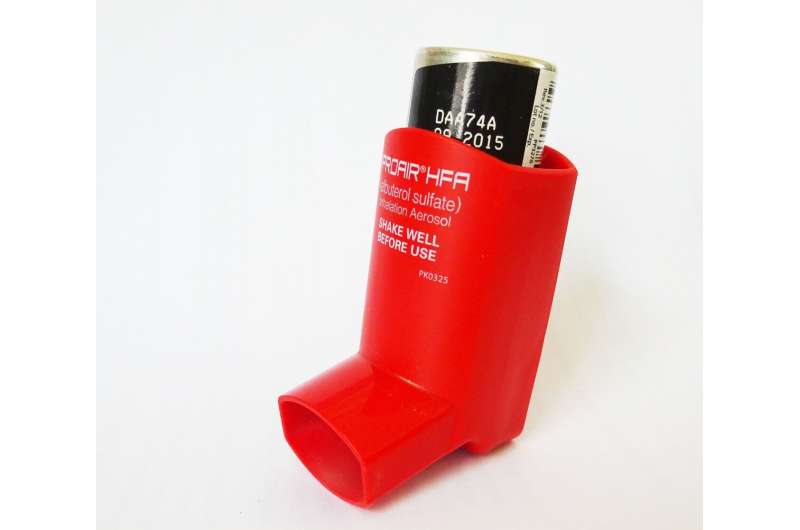
A new way to treat asthma symptoms and even repair previously irreversible lung damage could be on the horizon following the discovery of a potential new therapeutic target by scientists at the Universities of Aberdeen and Manchester.
Current treatments for asthma largely involve controlling the inflammation of lung tissue using steroid inhalers. However, four people die every day in the U.K. from asthma-related complications. Now, the team of researchers have investigated the scarring that occurs in lung tissue as a result of asthma and have been able to reverse these changes in animal models. The study is published in Science Immunology.
Although still in the early stages of development, this discovery paves the way for a new way to treat not only asthma, but many different diseases in which similar structural changes in tissues occur. Such diseases include conditions like chronic obstructive pulmonary disease (COPD), chronic heart disease and cirrhosis of the liver and account for approximately 40% of deaths worldwide.
Asthma affects more than 7 million people in the U.K., and severe asthma can have a hugely detrimental impact on an individual’s quality of life. Even when treated, asthma can be fatal and the most recent data shows it contributed to 1,465 deaths in the U.K. in 2022—this is despite the availability of new treatments which aim to dampen down inflammation in the lungs.
However, as well as inflammation, asthma also results in what has previously been considered to be irreversible structural lung changes. These changes include making the lungs stiffer and more scarred through increases in things like “extracellular matrix collagens.”
Using animal models that share features of severe asthma in people, the researchers found that preventing inflammation alone is not enough to reverse this tissue scarring. Instead, they found that blocking the action of specific protein molecules strongly associated with inflammation and tissue damage “remarkably reversed” scarring in the lungs.
Dr. Tara Sutherland, Lecturer of Immunology, who led the research at the University of Aberdeen, alongside collaborators at the University of Manchester, explains, “Drugs that inhibit inflammation in asthma are crucial for managing the disease. However, these drugs may not always be enough to prevent and reverse lung damage found in severe asthma.
“Our findings show that we also need to consider that structural lung changes occur in severe asthma and that these changes may occur independently of inflammatory pathways.
“A better understanding of these structural changes and their consequences for lung health could lead to development of new therapies that benefit people particularly with severe asthma and could potentially be used alongside drugs that stop inflammation.
“Although a first step in a long process, our study suggests avenues for new treatments that may have the potential to prevent disease progression and even reverse tissue scarring in asthma and many other diseases where fibrosis due to disorganized matrix formation is suggested to account for approximately 40% of worldwide mortality.”
James Parkinson, Research Associate from the Division of Immunology and Immunity to Infection and Respiratory Medicine at the University of Manchester who collaborated on the project, added, “This work adds a new layer to our understanding of how asthma develops. It also reinforces the importance of considering all aspects of airway remodeling when evaluating future potential therapies.”
More information:
James E. Parkinson et al, Allergen-induced airway matrix remodeling in mice can be prevented or reversed by targeting chitinase-like proteins, Science Immunology (2025). DOI: 10.1126/sciimmunol.adk6707
The content is provided for information purposes only.