

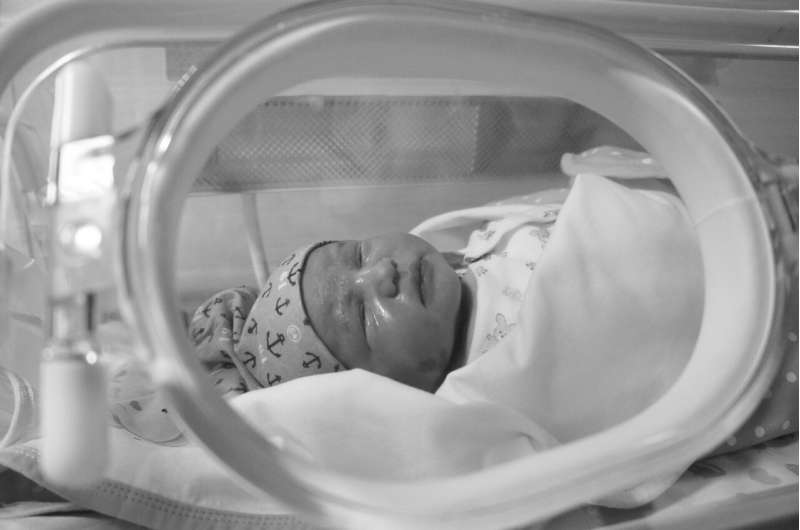
A wireless, portable incubator that could transform care for premature infants is reported in the International Journal of Medical Engineering and Informatics. It offers remote monitoring and automated environmental control to reduce the demands on hospital staff.
Premature, or pre-term, babies are those born at under 37 weeks gestation. There are around 15 million pre-term babies born globally each year. They are particularly vulnerable because their bodies struggle to regulate temperature, humidity, and oxygen levels.
Traditional neonatal incubators provide a controlled environment to support them, but they require constant manual oversight. Malfunctions in temperature or humidity control have been linked to serious complications and even infant death, underscoring the need for safer and more efficient solutions.
The new incubator integrates heating, a fan, humidity and temperature sensors, and an ultraviolet light for treating jaundice, all managed through an inexpensive Arduino UNO microcontroller. By using a dedicated Android app, health care staff can monitor and adjust conditions from up to 30 meters away, consolidating multiple functions onto a single interface. This remote operation reduces the risk of human error while allowing a single nurse to manage several critical parameters simultaneously.
The researchers have tested their system across thirty simulation runs, and statistical analysis confirmed its reliability. The wireless design also allows staff to respond quickly to abnormal fluctuations in vital conditions, addressing one of the key safety concerns in neonatal intensive care. The system’s portability and remote access could be particularly valuable in hospitals with high patient-to-staff ratios or limited resources, where traditional incubators demand continuous human supervision.
The demand for cost-effective, portable incubators is high, especially in regions with limited neonatal care infrastructure. By combining affordability, mobility, and wireless control, the device could improve outcomes for pre-term infants, reduce mortality rates, and relieve staffing pressures in intensive care units.
The next step for the research team is to develop the system to be able to manage several incubators from a single device and perhaps even over longer distances, potentially up to 100 kilometers.
More information:
Maham Sarvat et al, Remotely operated infant incubator, International Journal of Medical Engineering and Informatics (2025). DOI: 10.1504/ijmei.2025.148644
The content is provided for information purposes only.