

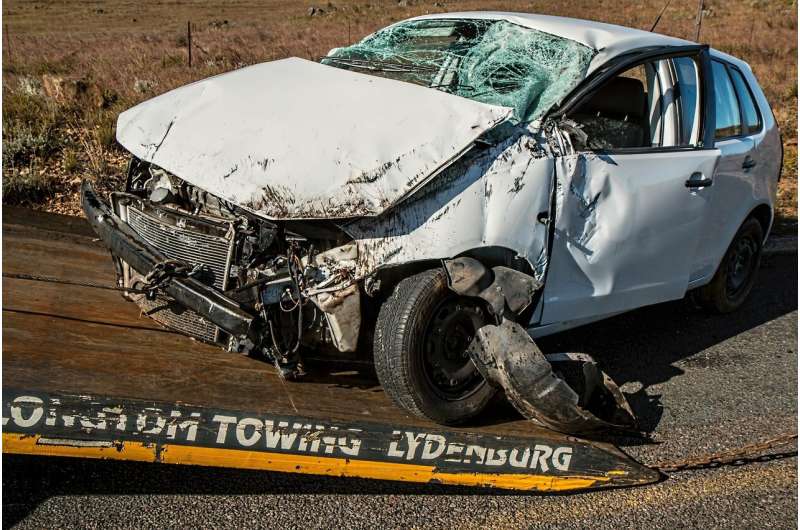
The belief that “friends do it too” is a major factor in young adults drink-driving (driving drunk) the morning after a night out, according to a study of almost 300 Queenslanders.
The University of the Sunshine Coast research identified five factors that increase the likelihood of people aged 18 to 25 taking illegal and dangerous risks by driving when they could still be above the blood-alcohol limit.
The five predictors of “next day drink-driving” are: harmful drinking, being a male, living in metropolitan locations, approving of the behavior individually, and believing that friends also engage in the behavior.
UniSC Research Associate Dr. Michelle Nicolls is concerned by the findings of the study she led and published in a paper titled “Young drivers’ next day drink driving: The role of social norms,” with Associate Professor Lisa Buckley.
The study is published in the journal Transportation Research Part F: Traffic Psychology and Behaviour.
“Driving under the influence is a major factor in road crashes and injuries, including 22% of all fatal crashes in Queensland,” says Dr. Nicolls, of the Motor Accident Insurance Commission/UniSC Road Safety Research Collaboration.
“In addition, driving with a blood-alcohol concentration above zero is illegal for L and P platers, which is concerning because the rate of alcohol leaving the body varies based on many factors such as sex, weight, type and amount of alcohol consumed. Therefore, it is possible that alcohol remains in the body the following morning despite ‘sleeping it off.’
“This study found that young drivers are engaging in next-day drink-driving more frequently than drink-driving, perhaps mistakenly assuming it is less risky to their own safety and that of other road users.”
More than 60% of young drivers in the online survey admitted to potentially driving above the legal blood-alcohol limit the next day and a quarter admitted to potentially drink-driving near the time of consumption.
The academics say that while much research and public discussion have focused on drink-driving, there is limited exploration of the predictors of next-day drink-driving.
“Further research is needed to examine young drivers‘ understanding of and experiences with this behavior so we can try to develop countermeasures to reduce its acceptance and likelihood,” says Dr. Nicolls.
More information:
Michelle Nicolls et al, Young drivers’ next day drink driving: The role of social norms, Transportation Research Part F: Traffic Psychology and Behaviour (2026). DOI: 10.1016/j.trf.2025.103404
The content is provided for information purposes only.