
- High levels of a protein may show that a person has underlying inflammation
- This is linked to heart attacks, kidney failure and even surgical complications
- Monitoring levels of troponin, the protein that’s responsible, may help doctors
- It will allow them to determine which patients need extra care after an operation
Stephen Matthews For Mailonline
2
View
comments
A simple blood test may be able to predict a patient’s chances of survival following surgery, a new study suggests.
High levels of a protein in the bloodstream may show that someone is suffering from underlying inflammation in their body, scientists claim.
This, known as the body’s response to injury, is heavily linked to heart attacks, kidney failure and even strokes.
Monitoring levels of troponin, the protein responsible, may help doctors know which patients need extra care after an operation.
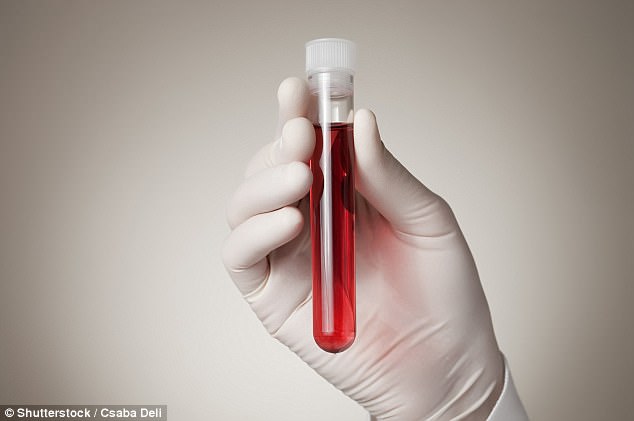
High levels of a protein in the bloodstream may show that a person is suffering from underlying inflammation in the body (stock)
Dr Matthew Jackson, based at The James Cook University Hospital, Middlesborough, who was involved in the study, spoke of the findings.
‘This test may help doctors’
He said: ‘By helping us to better predict how patients will fare after surgery, this test may help doctors to identify patients who could benefit from additional tests and medication to get them ready for their surgery and more intensive monitoring as they recover after their operation.
‘Now we need to find out why troponin levels are raised in some patients before surgery, and why these patients are more likely to die, in order to identify treatments that could reduce the risk of death following non-cardiac surgery.’
-
 Busy mother who thought she was run down because of her…
 ‘Sleeping beauty diets’ are putting women at risk of an…
 ‘It was a small price to pay for still being here’: Retired…
 Exercise is bad for your stomach: Taking part in vigorous…
How was the study carried out?
Dr Jackson and his team tested whether troponin levels – found in the bloodstream during a heart attack – could predict long-term survival after surgery.
Blood samples were taken from 993 patients before they underwent elective and emergency surgery at The James Cook University Hospital in Middlesborough.
BLOOD TEST FOR ALL CANCERS 10 YEARS BEFORE SYMPTOMS
A universal cancer test that can diagnose tumours a decade before symptoms appear is being developed by scientists in New York.
Known as a ‘liquid biopsy’, it involves patients providing a blood sample that is run through a laboratory machine for a highly sophisticated analysis.
It scans the blood for any DNA that has been shed by tumours. This starts circulating in the bloodstream long before patients feel symptoms.
The genetic code provided in this ‘circulating tumour DNA’ – known as ctDNA – tells scientists where in the body tumours are growing and how far the cancer has spread.
The test could be available within two years and the eventual goal is to offer it to patients alongside routine checks on their blood pressure and cholesterol at their GP surgery, the team at the Memorial Sloan Kettering Cancer Centre said.
The researchers used a troponin test that is often used in AE departments to diagnose a heart attack.
What were the findings?
A quarter of the patients who had levels of 50 nanograms per litre (ng/l) or over before their surgery died within six months, the researchers found.
This figure rose to 37 per cent dying within a year of their operation.
Among patients who showed pre-operative troponin level of less than 17ng/l, just 2.5 per cent died within six months.
This figure rose to 3.7 per cent of patients with lower levels of the protein dying within 12 months of their surgery.
The link between the raised troponin levels and a higher chance of death following surgery is not yet understood, the researchers added.
How the findings could help
Commenting on the study, Professor Metin Avkiran, associate medical director at the British Heart Foundation, said: ‘Troponin tests detect injury to heart muscle and are used to diagnose a heart attack.
‘This study suggests that an elevated troponin level in the blood before non-cardiac surgery, in the absence of a heart attack, is predictive of poor patient survival during the first 12 months after such surgery.
‘If we can understand the underlying causes of heart injury in such patients, their treatment may be tailored to improve outcome after non-cardiac surgery.’
The findings were presented at the British Cardiovascular Society in Manchester yesterday.
Share or comment on this article
-
 Nursery worker is left with broken ribs and needing…
 -
 Wife desperate for a divorce sets up her husband to cheat…
 -
 ‘I’ll have to try to explain to our daughter why he…
 -
 Heart-stopping video shows moment armed police gunned…
 -
 Police searching for EIGHTH victim of London Bridge…
 -
 ‘I’ll be back’: Diane Abbott vows to ‘rejoin the fray’…
 -
 Alex Rodriguez cheats on J. Lo and is not sexually…
 -
 Michelle Obama laments how her husband wore the exact…
 -
 Woman ‘brawled on the floor with her female friend after…
 -
 Scattered chairs and half-finished pints: Haunting…
 -
 Shameless parking wardens slap tickets on cars left…
 -
 Iran says Saudi Arabia was behind deadly Tehran…
 -
 ‘Popular’ PE teacher, 25, pleads guilty to having sex…
 -
 Bomb squad carry out two controlled explosions outside…
 -
 Donald Trump told James Comey ‘I need loyalty, I EXPECT…
 -
 BMW owner caught on camera punching and spitting on…
 -
 PIERS MORGAN: Theresa May’s savage police cuts and…
 -
 Just like home! Prince Harry is handed a cuppa and a…


Comments 2
Share what you think
-
Newest -
Oldest -
Best rated -
Worst rated
The comments below have not been moderated.
The views expressed in the contents above are those of our users and do not necessarily reflect the views of MailOnline.
Close
Your comment will be posted to MailOnline as usual.
Close
Your comment will be posted to MailOnline as usual
We will automatically post your comment and a link to the news story to your Facebook timeline at the same time it is posted on MailOnline. To do this we will link your MailOnline account with your Facebook account. We’ll ask you to confirm this for your first post to Facebook.
You can choose on each post whether you would like it to be posted to Facebook. Your details from Facebook will be used to provide you with tailored content, marketing and ads in line with our Privacy Policy.