Understanding Hip Pain: Anatomy, Causes, and Relief
The Complexity of Hip Pain
The hip joint, a ball-and-socket structure, is central to mobility, balance, and stability. Hip pain can stem from various causes, including injury, arthritis, nerve impingement, or referred pain from other areas like the spine or pelvis. Its precise location—front, side, or back of the hip—often points to the underlying issue.
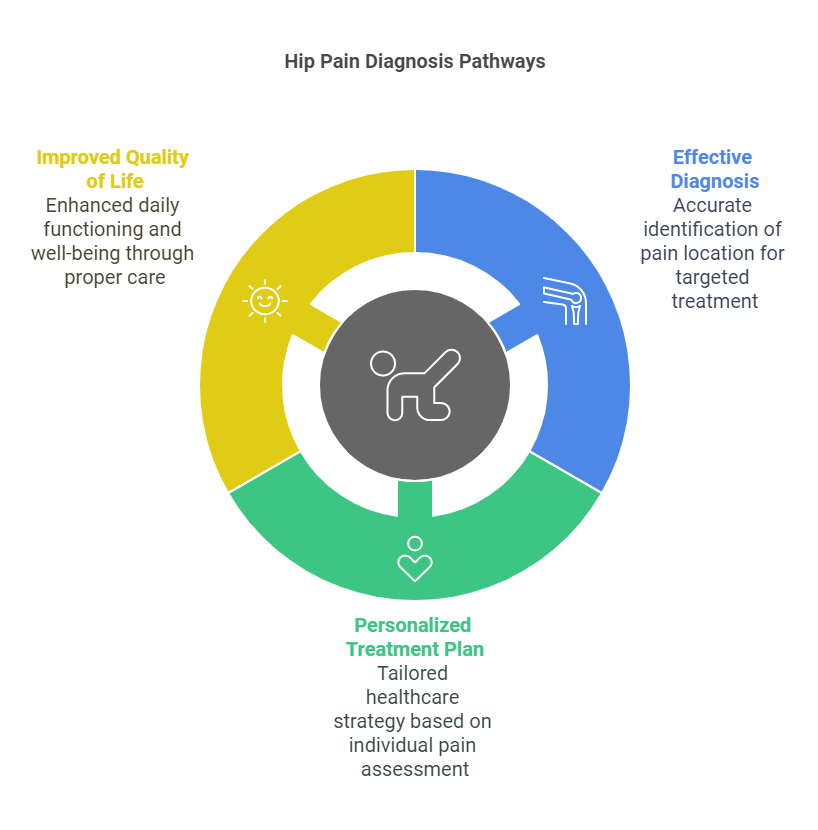
Modern medicine highlights the importance of location-specific diagnosis. For instance, pain at the front of the hip often involves the joint itself, while lateral hip pain could be related to soft tissue issues like bursitis. Understanding these patterns is essential for effective treatment. A visual guide, such as a hip pain location diagram, can help individuals identify and describe their pain, facilitating quicker and more accurate diagnoses.
Why Hip Pain Matters
Hip pain affects daily activities such as walking, climbing stairs, and sleeping. Its prevalence increases with age, with conditions like osteoarthritis impacting over 10% of people above 60 years old globally. Additionally, hip injuries, such as labral tears or fractures, are common among athletes and older adults. Addressing hip pain early can prevent chronic disability, improve mobility, and enhance overall quality of life.
A Brief History: Understanding Hip Pain Through the Ages
- Ancient Practices: Traditional systems like Ayurveda and Chinese medicine recognized hip pain, attributing it to imbalances in energy or elements, and recommended treatments like herbal remedies and acupuncture.
- Anatomical Discoveries: Renaissance anatomists mapped the hip joint, uncovering its structure and biomechanics, paving the way for modern orthopedic interventions.
- Modern Advances: The 20th century brought diagnostic imaging, such as X-rays and MRIs, allowing for precise identification of hip pain sources. Today, robotic-assisted hip replacements and regenerative therapies like PRP (platelet-rich plasma) are revolutionizing treatment.
Subtopics and Key Questions
- Anatomy of the Hip Joint
- What structures compose the hip joint, and how do they function together?
- How can pain from surrounding areas, such as the pelvis or lumbar spine, mimic hip pain?
- Identifying Pain by Location
- What does pain at the front of the hip indicate (e.g., arthritis, hip flexor strain)?
- How does lateral hip pain differ in cause and treatment from pain at the back?
- Common Causes of Hip Pain
- How do conditions like bursitis, tendinitis, and labral tears develop?
- How does posture or prolonged sitting contribute to hip discomfort?
- Using Diagrams for Diagnosis
- How can diagrams help patients articulate their symptoms to healthcare providers?
- What are the benefits of visualizing hip anatomy for patient education?
- Conservative Treatments
- How effective are physical therapy, anti-inflammatory medications, and stretching routines for managing hip pain?
- Are lifestyle changes, like weight management, significant in reducing hip stress?
- Advanced Interventions
- What role do injections, such as corticosteroids or hyaluronic acid, play in pain relief?
- When is surgery, such as hip arthroscopy or replacement, necessary?
- Prevention Strategies
- How can regular exercise and proper ergonomics reduce the risk of hip injuries?
- Are there specific stretches or yoga poses beneficial for maintaining hip health?
- The Emotional and Psychological Impact of Hip Pain
- How does chronic hip pain affect mental health and daily living?
- What role can support groups or mental health professionals play in holistic pain management?
Understanding Hip Pain: The Complete Guide

1. Anatomy of the Hip Joint
Intro
The hip joint is one of the largest and most important joints in the body, designed to support weight and provide a wide range of motion. Its ball-and-socket structure connects the femur (thigh bone) to the pelvis, supported by cartilage, muscles, ligaments, and tendons.
Why It Matters
Understanding the anatomy of the hip allows for better insight into where pain originates. Knowing the structures—like the acetabulum (socket) and labrum (cartilage)—helps identify specific injuries or degenerative conditions.
Statistics and Examples
- Approximately 15% of adults over 45 report significant hip pain.
- Cartilage degeneration (as in arthritis) is the leading cause of hip pain in adults.
- Example: A runner experiences pain at the hip’s front due to overuse, straining the iliopsoas tendon.
Impact
Detailed anatomical knowledge aids doctors in targeted treatment and empowers individuals to make informed decisions about their health.
Above is the medical illustration highlighting the various locations of hip pain. It visually indicates anterior (front), lateral (side), and posterior (back) regions, along with common conditions.
The diagram shows the anterior (front), lateral (side), and posterior (back) regions of the hip. Each section is color-coded for clarity, with red indicating pain areas. The background is neutral and the focus is on anatomical accuracy, ideal for educational purposes.
2. Identifying Pain by Location
Intro
The location of hip pain—front, side, or back—provides crucial clues about its source. Pain in different regions suggests various conditions, such as arthritis, bursitis, or nerve impingement.
Why It Matters
Pain location guides treatment. Front pain often points to the joint, lateral pain to soft tissue issues, and posterior pain to referred causes like sciatica.
Statistics and Examples
- 60% of hip injuries in athletes involve the anterior hip (e.g., labral tears).
- Posterior hip pain is often related to lumbar spine disorders, affecting up to 40% of back pain sufferers.
- Example: An office worker with posterior hip pain finds relief through ergonomic seating adjustments.
Impact
Pinpointing pain by location enables faster diagnoses and appropriate interventions, preventing chronic complications.

3. Using Diagrams for Diagnosis
Intro
Visual tools like diagrams are invaluable in diagnosing and treating hip pain. They help patients and doctors identify pain locations and understand underlying structures.
Why It Matters
Diagrams bridge the gap between complex medical terms and patient understanding, enhancing communication during consultations.
Statistics and Examples
- Clinics using visual aids report a 25% improvement in patient comprehension.
- Example: A diagram shows a runner’s pain corresponds to a labral tear, expediting diagnosis and treatment.
Impact
Diagrams empower patients, making them active participants in their healthcare journey.
Common Locations of Hip Pain
-
Anterior Hip Pain (Front of the Hip)
-
Location: Pain felt in the front of the hip, often radiating to the groin.
-
Possible Causes:
-
Hip flexor strain
-
Osteoarthritis
-
Labral tear
-
-

-
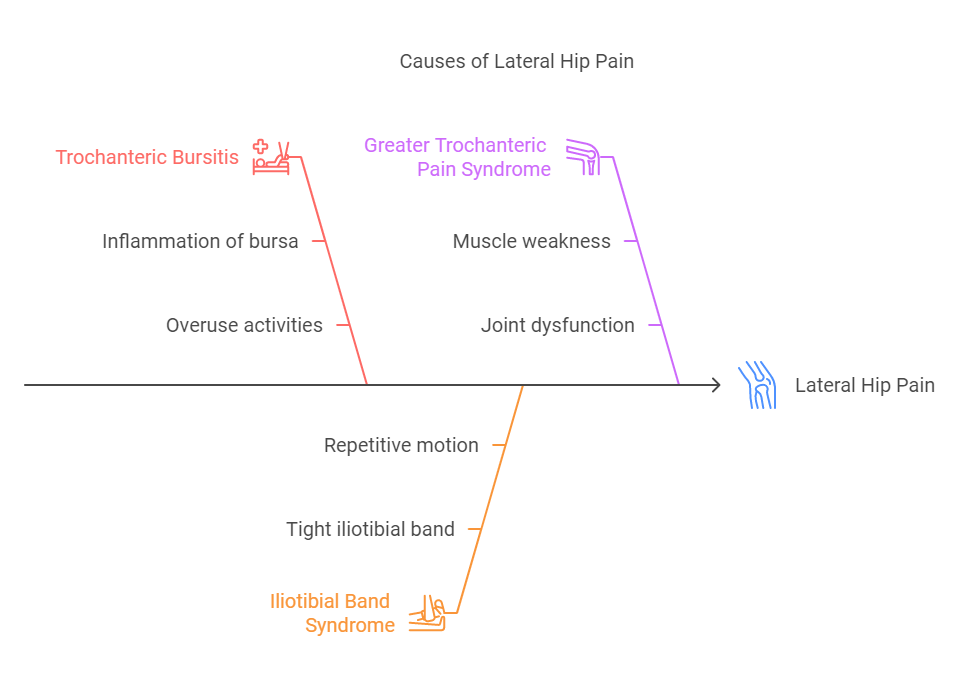
Lateral Hip Pain (Outer Side of the Hip)
-
Location: Pain on the outer side of the hip, which may extend down the outer thigh.
-
Possible Causes:
-
Trochanteric bursitis
-
Iliotibial band syndrome
-
Greater trochanteric pain syndrome
-
-
-
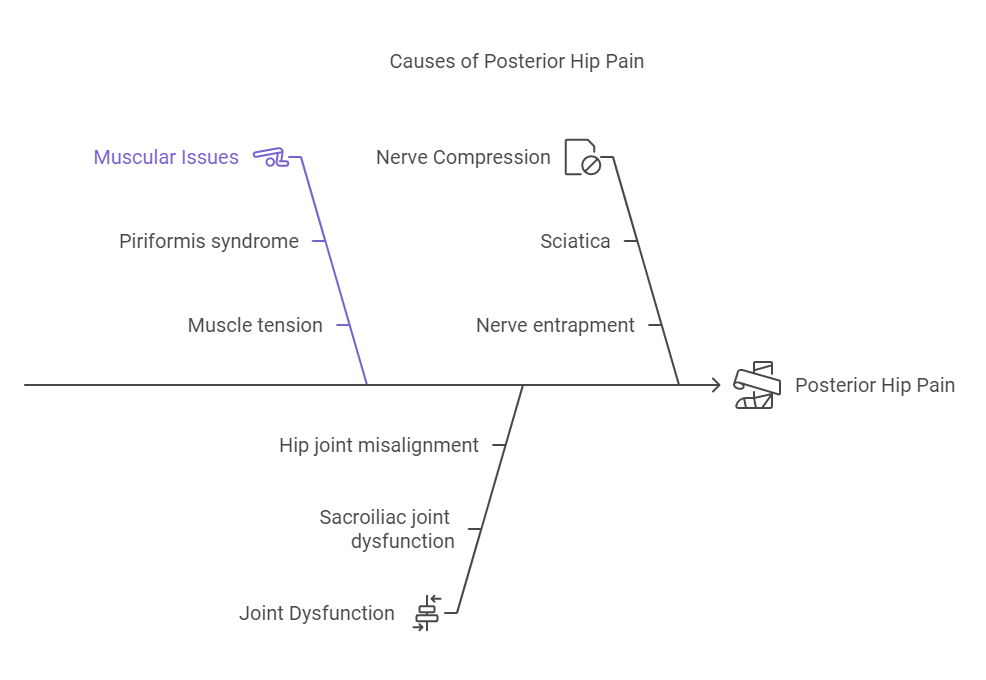
Posterior Hip Pain (Back of the Hip)
-
Location: Pain located at the back of the hip, possibly radiating down the back of the thigh.
-
Possible Causes:
-
Piriformis syndrome
-
Sacroiliac joint dysfunction
-
Sciatica
-
-
-
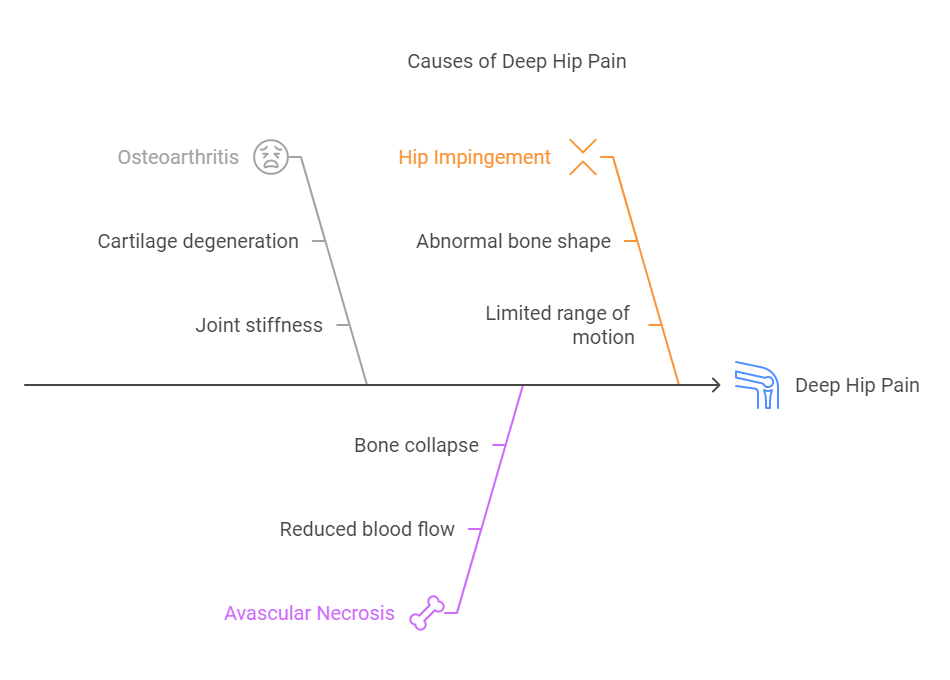
Deep Hip Pain (Inside the Hip Joint)
-
Location: Pain felt deep within the hip joint, often described as a dull ache.
-
Possible Causes:
-
Osteoarthritis
-
Avascular necrosis
-
Hip impingement
-
-
4. Common Causes of Hip Pain
Intro
Hip pain can stem from various sources, including trauma, overuse, or chronic conditions like osteoarthritis.
Why It Matters
Identifying the root cause is essential for effective treatment. For instance, a muscle strain requires a different approach than a degenerative joint condition.
Statistics and Examples
- Osteoarthritis affects 32.5 million adults in the U.S., with the hip being a common site.
- Trochanteric bursitis accounts for 25% of hip pain cases in older adults.
- Example: A cyclist develops bursitis from repetitive stress, improving with physical therapy.
Impact
Recognizing common causes allows individuals to seek timely interventions and prevent worsening of their symptoms.
5. Conservative Treatments
Intro
Non-invasive methods, such as physical therapy, anti-inflammatory medications, and lifestyle changes, are often the first line of defense against hip pain.
Why It Matters
Conservative treatments minimize risks and side effects while addressing the pain’s root cause.
Statistics and Examples
- Studies show 70% of patients with mild hip arthritis improve with exercise alone.
- Example: A sedentary individual reduces hip stiffness through daily stretching and swimming.
Impact
Early adoption of conservative treatments can delay or even prevent the need for surgery.
6. Advanced Interventions
Intro
When conservative methods fail, advanced interventions like injections or surgery may be necessary.
Why It Matters
These treatments offer relief for severe cases, restoring mobility and reducing pain when other options are ineffective.
Statistics and Examples
- Over 450,000 hip replacements are performed annually in the U.S., with a success rate exceeding 90%.
- Example: A patient with severe arthritis undergoes hip replacement, regaining pain-free mobility within months.
Impact
Advanced interventions transform lives by alleviating pain and improving function.
7. Prevention Strategies
Intro
Preventing hip pain requires proactive steps, such as maintaining strength, flexibility, and good posture.
Why It Matters
Prevention reduces healthcare costs, enhances quality of life, and minimizes the risk of chronic conditions.
Statistics and Examples
- Regular physical activity reduces the risk of osteoarthritis by 30%.
- Example: A yoga enthusiast avoids hip injuries by practicing poses that strengthen and stretch the joint.
Impact
Preventative measures build resilience, enabling individuals to maintain an active lifestyle.
8. The Emotional and Psychological Impact of Hip Pain
Intro
Chronic hip pain often takes a toll on mental health, leading to feelings of frustration, depression, and isolation.
Why It Matters
Addressing emotional well-being is as critical as physical treatment for comprehensive pain management.
Statistics and Examples
- Up to 50% of chronic pain sufferers report symptoms of depression.
- Example: Joining a support group helps a retiree manage both hip pain and the emotional challenges it brings.
Impact
Incorporating mental health care into pain management plans promotes holistic healing and better outcomes.
Conclusion and Action Plan
Hip pain is a multifaceted challenge requiring a combination of anatomical understanding, precise diagnosis, and targeted interventions. From identifying pain by location to leveraging diagrams for education, this guide provides the tools to navigate the complexities of hip pain.
Action Plan:
- Understand Your Pain: Use diagrams or visual aids to pinpoint pain and seek medical consultation.
- Adopt Conservative Measures: Incorporate daily stretching, exercise, and ergonomic practices.
- Explore Advanced Treatments: Consult a specialist for options like injections or surgery if conservative methods fail.
- Focus on Prevention: Maintain a healthy weight, stay active, and prioritize joint-friendly activities.
- Address Mental Health: Seek support for emotional challenges associated with chronic pain.
By following these steps, individuals can regain control over their health, ensuring a pain-free and active future.
Identifying the specific location of hip pain is crucial for effective diagnosis and treatment. If you are experiencing hip pain, it is advisable to consult a healthcare professional for a thorough evaluation and personalized treatment plan. Understanding the potential causes associated with different pain locations can empower individuals to seek the appropriate care and improve their quality of life.