

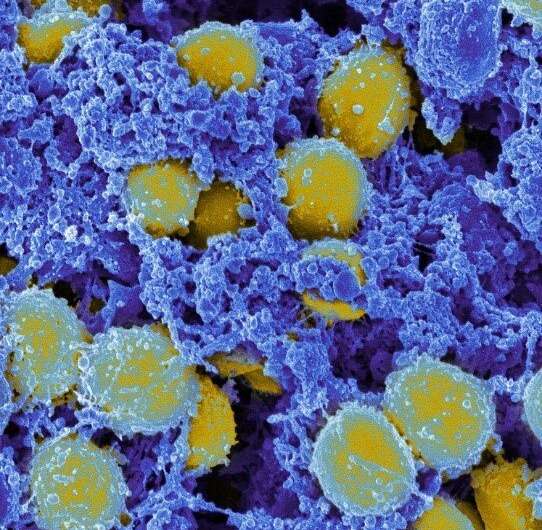
A newly designed AI-powered tool is effective in developing treatments to attack antibiotic-resistant bacteria by breaking down their outer defenses, according to new research from Houston Methodist. The study, published in Nature Communications and led by Eleftherios Mylonakis, M.D., Ph.D., chair, Houston Methodist Charles W. Duncan Jr. Department of Medicine, details how researchers used the tool to identify antimicrobial peptides—small proteins that are part of the body’s natural immune system—that effectively targeted bacteria like methicillin-resistant Staphylococcus aureus (MRSA) in lab tests.
“Antibiotic-resistant bacteria represent a major global health threat, with an estimated 2.8 million infections and more than 35,000 deaths annually in the U.S. Addressing this challenge is critical,” Mylonakis said.
“Antimicrobial peptides offer a promising approach to target difficult-to-treat bacteria while reducing the likelihood of resistance. However, designing these molecules with precision has traditionally been complex and time-intensive. To overcome this, we developed an AI-powered platform that enables the identification and design of peptides most effective against MRSA and other pathogens.”
First authors Fadi Shehadeh and Biswajit Mishra, together with their collaborators, designed CAMPER (Constraint-driven AMP Engineering with Ranking), an AI-based platform that integrates machine learning with biologically informed features. CAMPER evaluates and ranks libraries of candidate peptides based on their physical and chemical properties and predicted performance.
Using this approach, the team identified a promising candidate, WP-CAMPER1, which showed potent activity against MRSA at low concentrations and revealed its potential for treating antibiotic-resistant infections.
“Ultimately, our study reports and validates the CAMPER methodology, demonstrating its ability to generate peptides that show effectiveness against difficult-to-treat and persistent infections. It represents an important step toward a scalable platform for developing therapeutics targeting complex pathogens,” Mylonakis said.
Publication details
Fadi Shehadeh et al, CAMPER: mechanistic artificial intelligence for designing peptides that target MRSA persisters, Nature Communications (2026). DOI: 10.1038/s41467-026-70348-9
Provided by
Houston Methodist
The content is provided for information purposes only.