

Scientists at Newcastle University’s Neural Circuits Laboratory, in collaboration with researchers at the Blue Brain Project (EPFL, Switzerland) and leading institutions in Spain, have published a study that advances understanding of the brain’s chemical messengers—acetylcholine, dopamine and serotonin—known as neuromodulators.
The research, published in PLOS Computational Biology, combines cutting-edge experimental measurements with some of the most detailed computational models of the brain ever constructed to reveal how acetylcholine, dopamine and serotonin shape the electrical activity of tens of thousands of neurons simultaneously in the developing brain.
Dr. Srikanth Ramaswamy, senior author and head of the Neural Circuits Laboratory at the Biosciences Institute, Newcastle University, said, “Understanding how the brain’s chemical systems regulate consciousness, sleep and attention has been a central challenge in neuroscience for decades. Our work provides a rigorous, quantitative framework for linking the anatomy of these systems to their functional impact—and generates entirely new, testable predictions for the field.”
Mapping the brain’s chemical blueprint
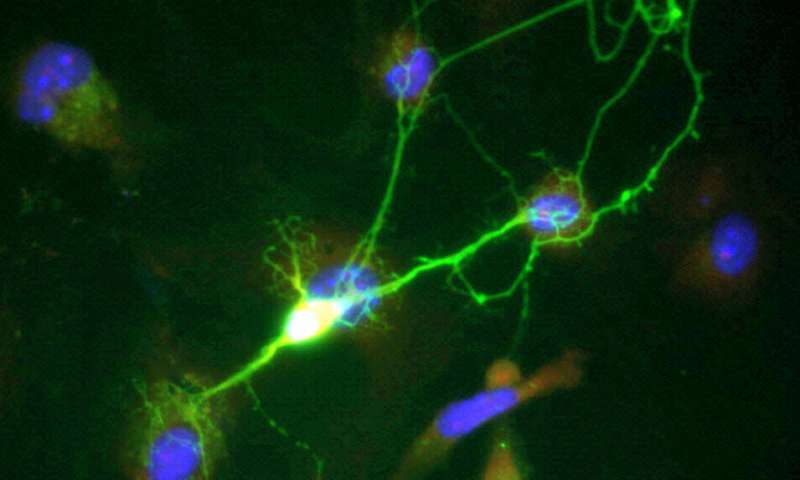
The team first mapped, with unprecedented precision, the density and spatial distribution of neuromodulatory fibers—the microscopic “wiring” through which these chemical signals are delivered—across all layers of the rat somatosensory cortex.

Using state-of-the-art immunocytochemical staining and stereological techniques, they found that the cholinergic (acetylcholine) system is the dominant neuromodulatory system, with a fiber varicosity density 2.3 times greater than that of the serotonergic system.
These detailed anatomical measurements were then integrated into a biophysically detailed computational model of the cortex, allowing the team to simulate—for the first time—how activation of these three chemical systems alters the rhythmic electrical activity of a complete cortical microcircuit.
The key findings were:
- Acetylcholine powerfully suppresses slow brain oscillations (delta waves associated with deep sleep), consistent with its well-known role in promoting wakefulness and attention. Critically, the team’s simulations suggest this effect is better explained by precise, synapse-to-synapse signaling rather than diffuse “volume” release—resolving a long-standing debate in the field.
- Dopamine and serotonin also desynchronize cortical activity, dampening slow oscillations in sensory brain regions—a role previously underappreciated for these neuromodulators outside of the prefrontal cortex.
- Serotonin uniquely induces faster theta oscillations, pointing to a previously unexplored role in sensory processing that may be relevant to understanding how serotonin-targeting antidepressants exert their therapeutic effects.
- Dopamine exerts the broadest anatomical influence, innervating both excitatory and inhibitory neurons across all cortical layers, suggesting a far-reaching role in regulating overall network state.
All experimental data and the full biophysical computational model have been made freely available to the global research community via open-access repositories, enabling scientists worldwide to build upon and extend these findings immediately upon publication.
Understanding could lead to treatments
Disruptions to neuromodulatory systems—particularly acetylcholine, dopamine and serotonin—underlie some of the most prevalent and debilitating neurological and psychiatric conditions, including Alzheimer’s disease, Parkinson’s disease, depression and schizophrenia.
By providing a detailed, computationally grounded picture of how these systems operate at the level of individual neurons and circuits, this research lays critical groundwork for the development of more targeted and effective therapeutic strategies.
This work also directly informs the growing field of brain-inspired artificial intelligence, providing quantitative principles of neuromodulation that can be translated into next-generation neuromorphic and AI architectures.
Publication details
Cristina Colangelo et al, Quantitative anatomy and biophysical modeling of ascending neuromodulatory systems in the developing rat neocortex, PLOS Computational Biology (2026). DOI: 10.1371/journal.pcbi.1014460
Vishal Sood, Modeling and simulating neuromodulatory organization in the Neocortex, Zenodo (2026). DOI: 10.5281/zenodo.14587678
Journal information:
PLoS Computational Biology
This content is provided for information purposes only.