
The surprising innovation stories behind that sunny afternoon delight
GUEST POST from John Bessant
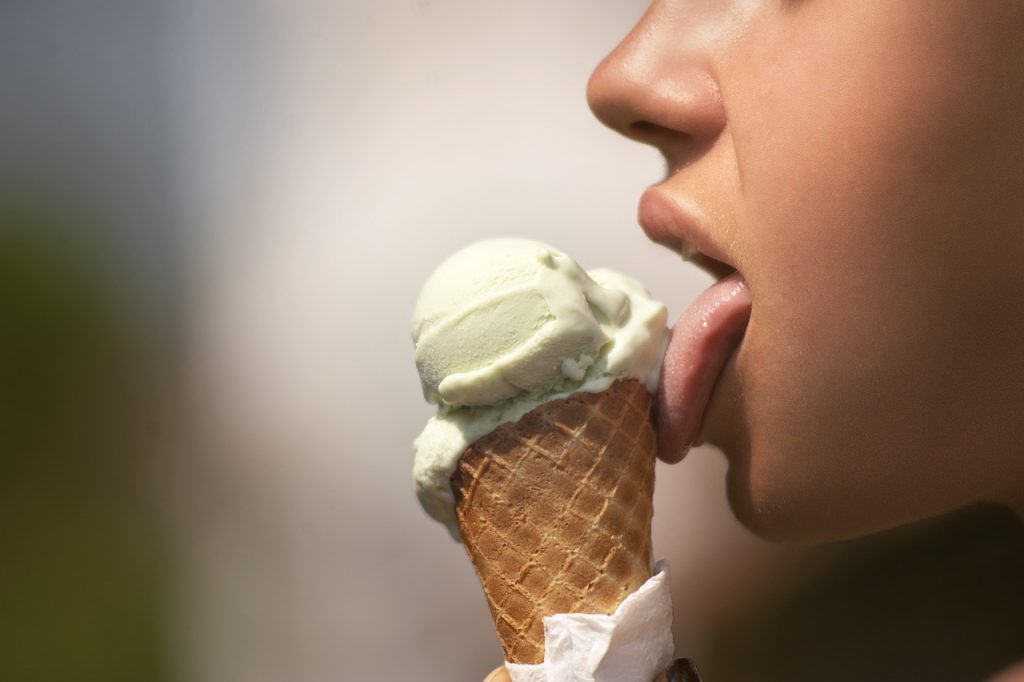
Season of mists, mellow fruitfulness — and those rare but wonderful days when the sun smiles down benignly. Strolling in the park, absorbing the warmth my attention was taken Or rather, to the face of a toddler who was very happily getting himself around an eminently lickable cone, with the usual results. We probably don’t really have to worry too much about the dietary impact of ice cream in situations like these because 80% of the foodstuff was being liberally spread around his face, across his clothes or dripping sadly to the floor. Which prompted the idle thought (it was a very warm and lazy afternoon) about the possibility of non-melting ice cream and from there to reflections on the general pattern of ice cream innovation.
It’s been with us a long time; the origins of ice cream are shrouded in the usual temporal mists but it’s generally thought to have emerged from eating snow and then someone having the bright idea (in China around 200BCE) of mixing in some milk and rice. Great if you happen to have nearArmed with this process innovation and after a few hundred more years they developed a delicacy called a sharbat — an ice-based fusion of various flavourings and a magic ingredient — sugar — which trade with India had given them access to. It’s not a huge stretch of the imagination to think that Xanadu (in Coleridge’s famous poem Kubla Khan) — his ‘…. miracle of rare device, A sunny pleasure-dome with caves of ice’ was populated Not surprisingly the idea of ice cream spread across Europe though the pace of innovation slackened somewhat. It took another couple of centuries before ships began returning from the exciting exploratory voyages of the 16th century bringing with them a wonderful range of new flavours and additives — sugar, chocolate, vanilla and many more exotic spices. This kick-started a new phase of product innovation which placed the delicacy firmly on the tables of those people wealthy enough to afford it. Experiments proliferated and it was in England that the idea of mixing in milk was developed; in her cookery book published in 1718 Mrs Mary Eales wrote the first recipe down, based on her experience working as confectioner to Queen Anne:
Take Tin Ice-Pots, fill them with any Sort of Cream you like, either plain or sweeten’d, or Fruit in it; shut your Pots very close…
Lay a good deal of Ice on the Top, cover the Pail with Straw, set it in a Cellar where no Sun or Light comes, it will be froze in four Hours.
Across the pond it was the same story. A confectioner called Philip Lenzi was the first to announce publicly the sale of ice cream, advertising in the New York Gazette in May, 1777 and George Washington indulged his presidential weakness for the delicacy to the tune of a $200/day habit during the summer of 1790. It was one of his chefs, Augustus Jackson, who came up with the valuable process innovation of adding salt to the ice mixture to lower its freezing point.
The only problem with all of this was that the cost of the key ingredient — ice — was so high that ice cream remained firmly at the luxury end of the market.
We can use another innovation lens to help understand what happened next. Abernathy and Utterback’s valuable model of innovation dynamics suggests that emphasis shifts during an innovation’s life cycle; in its early days the attention is on experimenting with the core product idea until a ‘dominant design’ emerges which captures the attributes the market values. This is followed And in the case of ice cream this shone a spotlight on the core problem. If ice cream were ever to shift from being the exclusive luxury consumed That someone was a 23 year-old Boston merchant named Fredric Tudor who in 1806 hit upon the idea of harvesting ice from his father’s farm and shipping it to the (relatively) nearHis business model wasn’t bad; shipping costs were low (because most made the journey to the islands empty to return with cargoes of sugar and fruit) and sawdust was free as a His gradual success encouraged others to work on the process side; one of his suppliers, Nathaniel Wyeth, developed a horse-drawn plough for cutting huge blocks of ice, opening the door to large-scale harvesting. Others worked on the logistics and insulation side; It’s at this point that we see another familiar innovation face — disruptive innovation. In 1834 Jacob Perkins had been granted a patent for his “Apparatus and means for producing ice, and in cooling fluids” with which he effectively demonstrated that vaporizing and condensing a volatile liquid in a closed system would do the job. In doing so he outlined the basic architecture which underpins today’s refrigerators; his work influenced a generation of researchers like the young Carl von Linde who beavered away in their laboratories to explore the approach. It wasn’t long before artificial ice making became a reality; Effectively this development sounded the death knell for the ice-harvesting industry, although it took a long time to go under. For a while both industries grew alongside each other, learning and innovating along their different pathways and expanding the overall market for ice — for example,  All of which was good news for the ice cream side of things. The stage was set now for another kind of innovation — market positioning. Anticipating Henry Ford His ice came from the nearIt helped bring ice cream to the attention of a wide population though it didn’t do much for public health. His imitators (in a classic example of what Joseph Schumpeter called ‘swarming’) soon began offering ice cream everywhere but it was often served under questionable sanitary conditions. Essentially when you had finished your penny lick you handed the glass shell back to the vendor who would give it a perfunctory rinse in what was increasingly dirty water, wipe it with a rag — and then use it for their next sale!
Gatti’s efforts on the supply side to bring ice cream to the masses were matched These developments were mirrored in other countries; Manufacturing ice cream was pioneered in in America in 1851 Gatti didn’t stop with selling ice cream. He understood the challenge of scaling innovations and the importance of building a system, a network which could deliver value at scale. He used his early profits to buy into ice storage, opening in 1857 an ‘ice well’ next to the Regent’s Canal where he could store ice for use all year round — and also sell it to others. It was so successful that he built a second in 1862 and also began importing ice from Norway, shipping it up the river Thames, unloading and transferring to barges and then moving it His ice warehouses also supplied the growing number of small vendors who would make and sell ice cream from stalls and shops, opening up the market on the back of a plentiful supply of the cold stuff. And they also enabled a distribution network for the finished product; This trend towards portability of sales outlet led to another example of a common innovation phenomenon — peripheral innovation. In this case it involved the invention, often So, he began experimenting with an edible container, based on making waffles and then folding them before they cooled into small cups. The idea worked and people began to enjoy the additional taste experience as well as the contents; his business boomed and That same year at the St Louis World’s Fair saw ice cream seller Arnold Fornachou running short of paper cups and increasingly desperate to find an alternative. The next-door concession was a stall run (This appears to be another case of simultaneous innovation although according to his daughter, Marchiony also exhibited his waffle cups at the same World’s Fair and it was he who invented the cone).
It didn’t really matter; the market grew fast enough to accommodate both of them. By 1924 annual production in the USA reached 245million cones and the idea had spread around the world. Ice cream had become big business and it drew in a number of other players including one of the largest butchers in the UK, the Wall’s company. They saw the potential in diversifying into ice cream since sales of meat traditionally slumped in the summer, and they also had extensive investments and experience in refrigeration. They began experimenting in 1913 and went into full-scale production after the First World War in 1922.
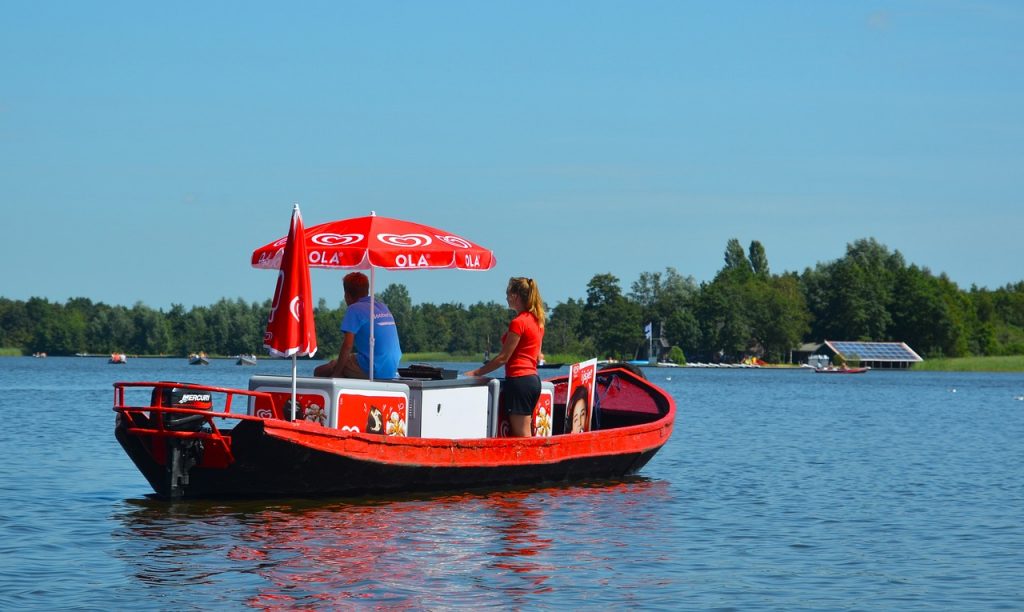
They sold their ice cream in their shops and even going door-to-door and they also mobilised a fleet of bicycles to distribute during the summer of 1923; Ice cream delivery vans were a next obvious step since they could extend the range of coverage and carry more stock on board. Equipped with loudspeakers to replace the bicycle bell they became a feature of every summertime street across the country. They also opened up an interesting sideline in what we might call ‘pirate innovation’ — using a novel idea in unexpected ways.
The city of Glasgow in Scotland became notorious during the 1980s for what were termed the ‘ice cream wars’ in which there was increasing violence between ice cream van salesmen — a classic case of gangland turf wars. These weren’t fuelled Back to our Abernathy/Utterback model of the innovation life cycle which also points us towards the next innovation wave which occurred in the 1970s. Once a dominant deisgn has been established and process innovation takes over there’s a drift towards maturity — which opens up the possibility of new growth coming as the cycle repeats. In the case of ice cream this was through marketing innovation — repositioning the product.
This may involve significant storytelling, weaving a new narrative around an old idea. In the case of ice cream it changed perception of the product from a simple treat to be enjoyed Of course, this effectively returned ice cream to where it had started — as something which only the wealthy could afford. Only this time its luxury appeal was to everyone; the rise of such specialist ice cream can be seen today in the amount of refrigerated cabinet space now devoted to it in supermarkets.
Today’s market for ice cream is vast; estimates suggest it will reach $97.85 billion in 2027, up from $71.52 billion in 2021. And that’s without taking the potential demand increase which might come if global warming continues! It also provides further incentive for innovation, with increasing investment into advanced RD to try and understand things like the micro-crystalline structures of ice cream or the key parameters involved in stimulating taste and texture receptors inside the mouth. So maybe somewhere in a laboratory right now someone is working on my non-melting ice cream idea.
Image credits: Pixabay
You can find a podcast version of this here
If you’d like more songs, stories and other resources on the innovation theme, check out my website here
And if you’d like to learn with me take a look at my online course here
 Sign up here to get Human-Centered Change Innovation Weekly delivered to your inbox every week.