

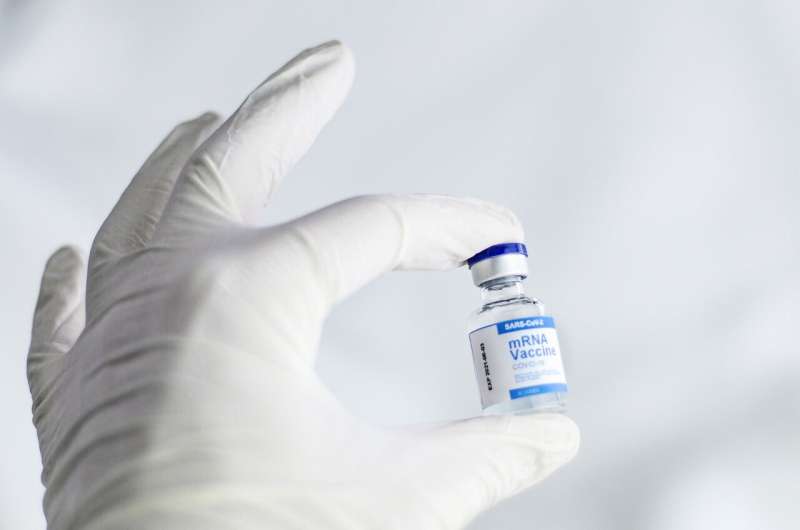
In a new study published in Nature Immunology, researchers at Boston Children’s Hospital demonstrated that pairing the original COVID-19 mRNA vaccine with an immune system enhancer, known as an adjuvant, improved the duration of the vaccine’s protection in mice. The combo also showed a more pronounced response against omicron viral components than the vaccine alone.
The researchers say that introducing adjuvants like this one to mRNA vaccines may alleviate the need for frequent boosters due to waning antibodies or new viral variants.
The research team, led by Ivan Zanoni, Ph.D., Boston Children’s Hospital chair in the field of immunology, developed the adjuvant from a branched sugar molecule, known as mannan, found on the outer cell wall of the yeast Candida. They combined mannan with alum, another long-used vaccine adjuvant, to form their so-called “mannadjuvant.”
“Our strategy takes advantage of the immune system’s innate ability to generally ramp up in response to a variety of components found in and on pathogens,” says Zanoni. “Even though the mRNA technology is the biggest breakthrough for vaccine technology in the last couple decades, we thought that there is still room for us to improve this platform.”
In an earlier study, Zanoni’s team used the mannadjuvant to enhance the effectiveness of a protein-based influenza vaccine. For this latest study, they tested the effectiveness of the adjuvant when combined with an mRNA vaccine.
“When you get the COVID vaccine, the antibody levels drop after six months. You have to keep immunizing to keep up a strong defense,” says Zanoni. “The virus mutates so quickly that the antibodies your body creates from the original vaccine don’t recognize the newer versions of the virus in circulation.”
An mRNA COVID vaccine contains genetic material—that encodes the instructions for building a piece of the virus’ outer spike protein—encased in a fatty, protective shell that delivers the vaccine inside immune cells. Zanoni’s team first ensured that the vaccine remained stable when combined with the adjuvant.
Next, the researchers tested the vaccine and adjuvant in mice. Compared to six months of protection that the typical vaccine provided, those mice given the vaccine with the mannadjuvant had antibodies to the virus’ spike protein up to two years later.
Finally, Zanoni’s team exposed the vaccinated mice to versions of the mutated COVID spike proteins from the omicron variants. The mice given the COVID-19 vaccine with the mannadjuvant had stronger immune responses to the variants than those mice only given the vaccine.
For future studies, the team plans to continue dissecting the molecular mechanism for how their adjuvant works to stimulate the immune system, especially since the immune system’s response to fungi isn’t well understood.
The team filed patents on mannadjuvant and formed a spinoff biotech company to further develop the technology for eventual use in human trials.
Publication details
A glycan-based adjuvant expands the breadth and duration of protection of mRNA-based vaccines, Nature Immunology (2026). DOI: 10.1038/s41590-026-02517-3
Journal information:
Nature Immunology
Key medical concepts
The content is provided for information purposes only.