

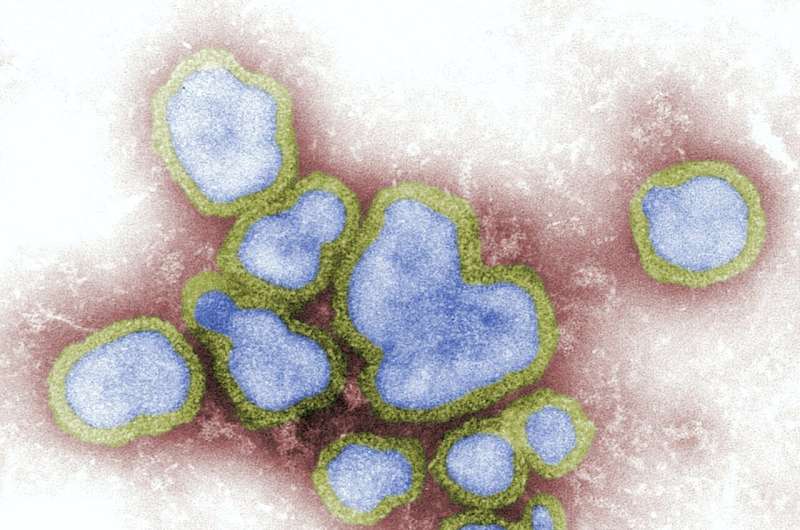
Select gut bacteria protect mice against post-influenza virus secondary bacterial pneumonia, according to a study published by researchers in the Institute for Biomedical Sciences at Georgia State University.
The study, published in the journal Science Immunology, sought to define whether intestinal bacteria influenced some individuals’ vulnerability to secondary bacterial infections following primary respiratory viral infection.
The work examined, in mice, whether segmented filamentous bacteria (SFB), variably present in the intestine of mammals, influenced susceptibility to secondary bacterial infection by common respiratory bacterial pathogens, namely Streptococcus pneumoniae, Haemophilus influenzae or Staphylococcus aureus, following influenza A virus infection.
The researchers found that SFB provided marked protection against these highly lethal infections. Much of the morbidity and mortality caused by influenza pandemics results from secondary bacterial infections, suggesting that an individual’s gut microbiota composition may be a pivotal factor in who survives such pandemics.
SFB’s protection against post-viral secondary bacterial pneumonia was mediated by specialized immune cells called alveolar macrophages. These cells are known to become dysfunctional following influenza viral infection. While SFB resides exclusively on the outer surface of the intestine, it nonetheless epigenetically reprogrammed alveolar macrophages to resist influenza virus-induced dysfunction, thus maintaining their robust defense against respiratory bacterial pathogens.
“The intestine is normally colonized by thousands of different bacterial species, but yet—incredibly—adding one more completely changes the way that lung macrophages respond to pathogens,” said lead author Vu Ngo, a research assistant professor in the Institute for Biomedical Sciences at Georgia State.
“We’re very hopeful that we’ll soon be able to harness the mechanism by which SFB reprograms alveolar macrophages, yielding novel pharmacological approaches to mitigate the severity of a broad assortment of respiratory infections,” added senior author Andrew T. Gewirtz of the Institute for Biomedical Sciences.
Publication details
Vu L. Ngo et al, Segmented filamentous bacteria reprogramming of alveolar macrophages limits postinfluenza bacterial pneumonia, Science Immunology (2026). DOI: 10.1126/sciimmunol.adt8858
Journal information:
Science Immunology
Key medical concepts
The content is provided for information purposes only.