

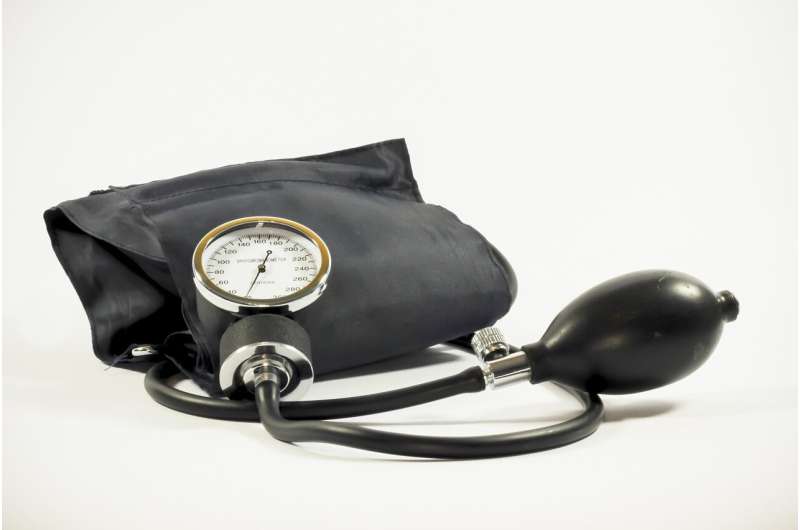
High blood pressure at birth may be an early warning sign, setting the stage for cardiovascular disease later in life. A longitudinal study, the ENVIRONAGE birth cohort, set out to understand whether blood pressure (BP) levels at the very beginning of life could help predict the risk of hypertension later in childhood.
The researchers followed a cohort of 500 healthy Belgian children, measuring their blood pressure at birth and again during preschool and school age, allowing researchers to track BP patterns over time.
They found that babies with higher blood pressure at birth or during preschool were much more likely to develop hypertension by school age—about 3.75 times higher than children with normal BP readings, according to findings published in JAMA Network Open.
These results challenge the common notion that cardiovascular disease is only an adult concern. Integrating blood pressure monitoring and management from birth into pediatric care could be a potential strategy to reduce cardiovascular risk later in life.
The earlier, the better
In 2022, the WHO found that cardiovascular diseases were the leading cause of death globally, with an estimated 19.8 million deaths in one year, accounting for about 32% of all deaths. The seed of these heart-related diseases is planted much earlier in life, often rooted in risk factors present during childhood.
One early warning sign is high blood pressure, a silent condition that can quietly damage organs over many years before symptoms appear. Fortunately, it is a modifiable risk factor, meaning that lifestyle changes and medical care can help lower the risk of developing the disease.
Despite this knowledge, no large-scale cohort studies have continuously monitored blood pressure from birth through childhood until now.
In the Environmental Influence on Aging in Early Life (ENVIRONAGE) study, the researchers documented blood pressure and other health markers from birth through different stages of childhood.
The study was carried out in Limburg, Belgium, beginning in February 2010 and ending in August 2024, and followed 500 healthy children over time. Each child’s blood pressure (BP) measurements were taken at key stages of early life: at birth, within the first three days of life, the first follow-up at preschool age between 4–6 years, and the second follow-up at school age between 9–11 years.

Three BP profiles
They used 2017 American Academy of Pediatrics guidelines to interpret the data. Based on the results, the researchers grouped these children into three groups.
First, the trackers, whose BP rank remained stable within the same quartile or moved only one level up or down. Then the horse racers, including children who started with lower BP, had their BP rise to high levels as they grew. Finally, the nontrackers whose BP rank dropped significantly over time.
The team found that 80% of children belonged to the trackers group as they maintained their BP percentile rank throughout the period of observation. They also observed that children with higher blood pressure at birth or in early childhood were more likely to have elevated blood pressure or develop hypertension by preschool and school age.
Understanding how BP develops from early childhood can help identify risks early and prevent unhealthy levels in children. The researchers thus emphasize that managing BP across the life course is essential to cardiovascular health.
Written for you by our author , edited by Sadie Harley, —this article is the result of careful human work. We rely on readers like you to keep independent science journalism alive.
If this reporting matters to you,
please consider a donation (especially monthly).
You’ll get an ad-free account as a thank-you.
Publication details
Yu-Ling Yu et al, Blood Pressure Trajectory From Birth to Preschool and School Age in the ENVIRONAGE Birth Cohort, JAMA Network Open (2026). DOI: 10.1001/jamanetworkopen.2025.51361
Journal information:
JAMA Network Open
Key medical concepts
The content is provided for information purposes only.