

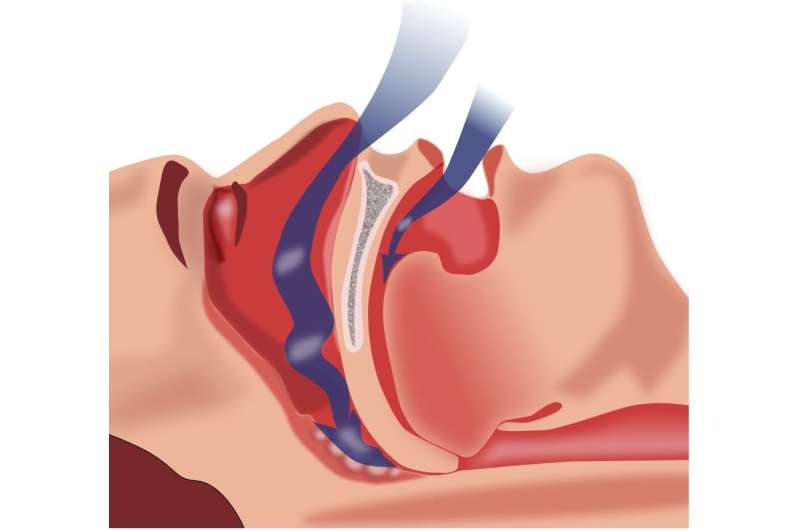
The drug sulthiame reduces the number of breathing pauses and improves sleep quality in patients with obstructive sleep apnea, according to a European clinical study in which the University of Gothenburg played a significant role. The findings offer hope for a drug-based treatment for people who cannot tolerate breathing masks.
The results have been published in The Lancet. A total of 298 patients with moderate to severe sleep apnea were included. One quarter received a placebo, while the remaining participants were given sulthiame in different doses. The clinical trial was conducted in four European countries and was double-blind, meaning that neither the participants nor the researchers knew who received the active treatment.
A possible breakthrough
The study found that patients receiving the higher doses of the drug had up to 47% fewer breathing interruptions and better oxygenation compared with those given placebo. Sulthiame works by stabilizing the body’s breathing control and increasing respiratory drive, thereby reducing the risk of the upper airway collapsing during sleep. Most side effects were mild and transient.
Jan Hedner, senior professor of pulmonary medicine at the Sahlgrenska Academy, University of Gothenburg, has played a leading role in the study.
“We have been working on this treatment strategy for a long time, and the results show that sleep apnea can indeed be influenced pharmacologically. It feels like a breakthrough, and we now look forward to larger and longer studies to determine whether the effect is sustained over time and whether the treatment is safe for broader patient groups,” says Hedner.
Ludger Grote and Kaj Stenlöf from the University of Gothenburg have also made significant contributions to the study.
Many struggle with CPAP
Sleep apnea occurs when the upper airways collapse during sleep, causing repeated breathing pauses, oxygen deprivation, and disrupted sleep. Over time, untreated sleep apnea increases the risk of high blood pressure, cardiovascular disease, stroke, and type 2 diabetes.
Although the condition is common, there is still no drug that treats the underlying cause. The standard treatment—continuous positive airway pressure (CPAP)—is highly effective but difficult for many to tolerate. Up to half of all patients discontinue CPAP within a year, as the mask can feel uncomfortable or disturb sleep.
Sulthiame is an existing medication previously approved for treating a form of childhood epilepsy, and is now being evaluated for sleep apnea.
More information:
Winfried Randerath et al, Sultiame once per day in obstructive sleep apnoea (FLOW): a multicentre, randomised, double-blind, placebo-controlled, dose-finding, phase 2 trial, The Lancet (2025). DOI: 10.1016/s0140-6736(25)01196-1
The content is provided for information purposes only.