

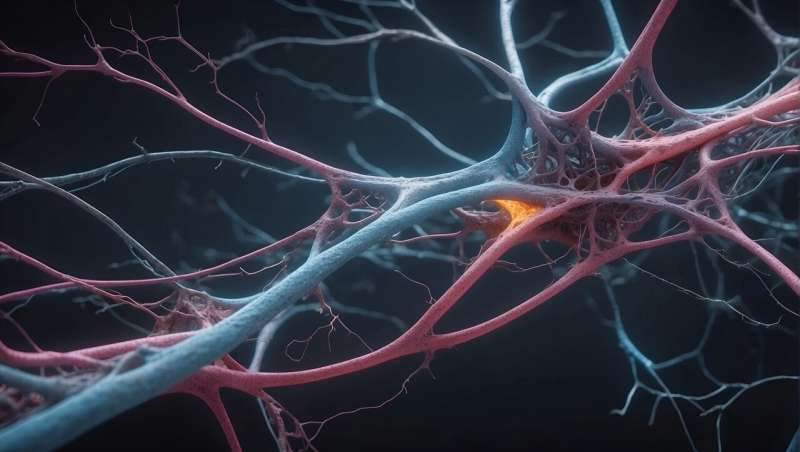
Researchers at Tsukuba University in Japan report that memories acquired while awake are stored in a more permanent form (called memory consolidation) during the REM stage of sleep, and that this process requires the reactivation of only a few specialized neurons involved in memory formation. They found that three of these neurons are crucial for memory consolidation during REM sleep.
The researchers focused on adult-born neurons (ABNs) in the hippocampal region of the temporal lobe, which are rare neurons known to be essential for maintaining proper memory function as the loss of these cells is observed in Alzheimer’s disease. However, it has remained unclear why the loss of this small neuronal population has such devastating effects on memory.
In the Nature Communications study, specially genetically modified mice, in which the activity of ABNs could be monitored, were exposed to a fear experience, and the researchers examined if the activities of these ABNs during initial memory formation were reproduced during REM sleep, when dreaming is believed to occur.
The researchers found that ABNs were reactivated in patterns similar to those observed during learning, and that when this activity was artificially blocked, the mice exhibited impaired memory recall.
Furthermore, the researchers found that for memories to consolidate, ABN activity must be synchronized with a rhythmic wave of milder activity termed the theta rhythm.
These findings represent a significant advance in our understanding of how the brain processes and preserves experiences during sleep.
More information:
Sakthivel Srinivasan et al, Transient reactivation of small ensembles of adult-born neurons during REM sleep supports memory consolidation in mice, Nature Communications (2025). DOI: 10.1038/s41467-025-62554-8
The content is provided for information purposes only.