

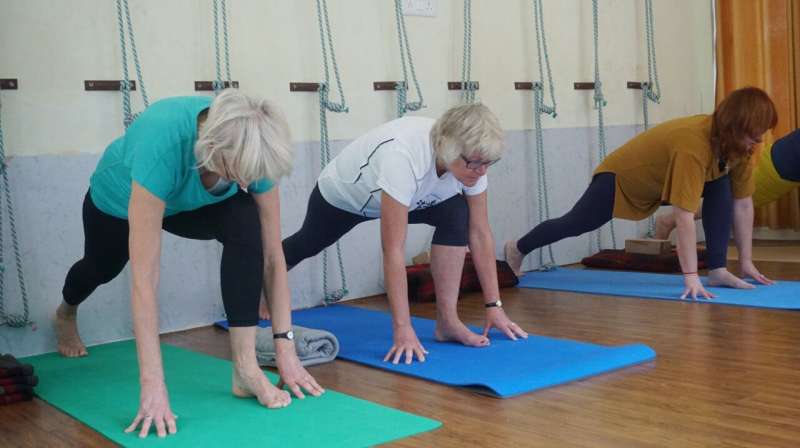
A new NDORMS study has found that a tailored exercise program for people aged 80 years and older with hip and/or knee osteoarthritis and other long term health conditions is both practical and acceptable, paving the way for a large clinical trial.
The TEMPO (Tailored Exercise Management for People aged 80 years or older with hip/knee Osteoarthritis and comorbidities) feasibility trial, published in BMJ Open, tested whether a personalized exercise intervention could be delivered effectively and whether enough participants could be recruited and retained.
Despite being our fastest growing population group, the over 80s are described as “the great forgotten” in clinical research. Exercise is considered the cornerstone of non-surgical treatment of hip and/or knee osteoarthritis; however, recommendations are based on data from trials conducted with patients aged 60–65 years, and people over 80 are often specifically excluded.
Dr. Pip Nicolson, Versus Arthritis Research Fellow at NDORMS explained, “People aged 80+ are a diverse population with very variable abilities. Most people are juggling multiple long-term health conditions which need to be considered. We know that not only are they underrepresented in research but they are less likely to be referred for exercise when they visit their GP with osteoarthritis, and when they are referred to physiotherapy they are often prescribed suboptimal exercise.”
The feasibility trial was delivered across four NHS outpatient physiotherapy services in England. Participants were randomly assigned to a 12-week tailored exercise program or usual care. Dr. Nicolson developed the TEMPO program in the first two years of her Versus Arthritis Foundation Fellowship. Development included a systematic review, interviews with people over 80 with osteoarthritis and comorbidities, identification of comorbidities to include exercise adaptations for, and mapping behavior change techniques to target engagement and adherence.
Key findings showed that recruitment, retention, and engagement targets were largely achieved:
- 54% of eligible participants were recruited, with an average age of 84 years.
- 88% completed the 14-week follow-up assessment.
- More than half (52%) of participants in the intervention group attended four or more sessions.
While adherence to home exercise decreased over time, the study confirmed that a full-scale trial would be feasible—with opportunities to strengthen recruitment diversity and program fidelity before proceeding. Pip was awarded a Bridging Fellowship from Versus Arthritis and is now evaluating the trial and working with communities and clinicians to refine the program and recruitment methods.
The TEMPO trial provides important groundwork for future research into how personalized exercise can improve mobility, independence, and quality of life for people in their 80s and beyond.
More information:
Philippa J A Nicolson et al, Tailored exercise management versus usual care for people aged 80 years or older with hip/knee osteoarthritis and comorbidities (TEMPO): multicentre feasibility randomised controlled trial in England, BMJ Open (2025). DOI: 10.1136/bmjopen-2025-104813
The content is provided for information purposes only.