

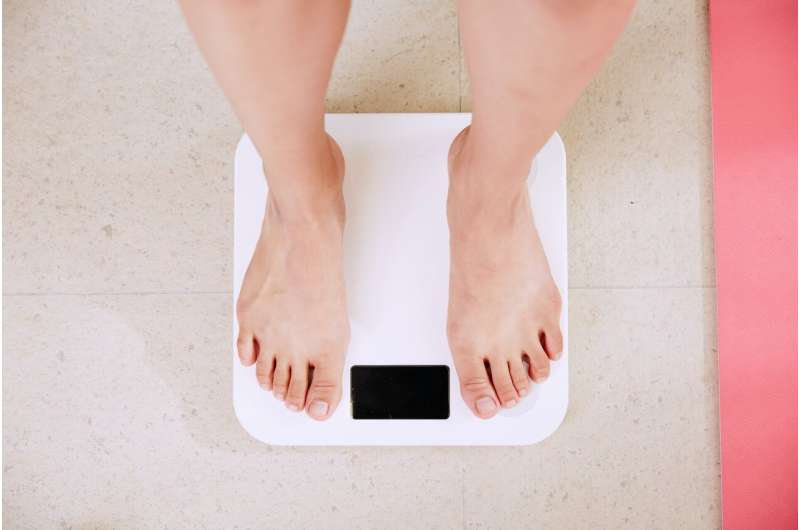
Criticism about their weight from their loved ones—partners, family, and friends—may make it harder for women to stay active and eat well during pregnancy and after giving birth, a University of Alberta study shows. Surveys of 463 women showed that 85% of them felt the sting of weight stigma during pregnancy from the people closest to them, and 74% experienced it after giving birth, with the result that they were less likely to meet nutrition and physical activity guidelines.
The findings, published in Midwifery, show how important their inner circle can be in helping expectant women stay healthy, says Dr. Taniya Nagpal, assistant professor in the Faculty of Kinesiology, Sport, and Recreation and co-author on the study.
“We can’t forget that pregnant and postpartum women spend a lot of time outside the health care realm, receiving advice from friends, partners, people they trust. So a family member telling a person that they ‘look like they’re having twins’—it’s important for people to understand that remarks surrounding weight, too little or too much, may be perceived as judgmental and are really unhelpful.”
In the study, the participants completed online surveys when they were at least 13 weeks along in their pregnancy and again three months after giving birth, reporting whether and how often they’d experienced weight-related judgment from those closest to them. They also reported their physical activity levels and whether their nutrition habits had improved, stayed the same, or worsened since becoming pregnant.
Expectant women who faced more frequent weight-shaming were less likely to meet nutrition guidelines, as well as movement recommendations both during and after pregnancy, the surveys showed. Along with that, the higher levels of criticism during pregnancy were linked to a lower likelihood of improving eating habits.
It’s likely that judgmental comments from friends and relatives discourage—rather than motivate—women during and after their pregnancies, suggests Nagpal, who is also a member of the Women and Children’s Health Research Institute.
“Negative comments don’t work. On January 1, what do we see in most fitness facilities? Before-and-after images of people engaged in exercise to lose weight. And if you zone in on those pictures, not only are they showing this weight change, but they’re also showing through the person’s emotions that you can’t achieve happiness until you look this way. And those unrealistic, judgmental promises might lead to someone saying, “OK, I’ll take that gym membership or try that diet program.” It basically creates the narrative that all you have to do is eat better and move more, and you will lose weight.”
But that approach doesn’t take into account related complexities and barriers, she notes.
“It ignores the psychological aspects of weight, any other health-related conditions that impact how you carry weight, and how difficult it may be to lose it. It suggests that you are wrong right now, instead of promoting positive body image or self-care,” Nagpal adds. “So it could be about much more than eating better or moving more. And negative comments just add to the layer of pregnancy and postpartum, where women are already feeling so much pressure to do right and to be perfect.”
Insights from the study can help raise awareness among health care professionals like nurses and midwives as they encourage their patients to follow healthy practices, Nagpal suggests.
“It’s important to recognize that weight stigma could be something their patients deal with at home, and that it’s possible they don’t have a social environment that would help facilitate these behaviors. Knowing this about a patient can improve their communication and advice to help that person overcome barriers to being active and eating well.”
Family and friends can also do their part by avoiding weight-related comments completely, or by at least reflecting on whether they need to say anything, Nagpal adds.
“Often when we are making those comments, we’re coming from this place of what we think a pregnant person should look like as weight gain happens. Is that really necessary? It should be noted that they are seeing health care providers who are measuring and tracking their weight.”
And the women on the receiving end of the criticism should know they’re not alone, she notes.
“Their experience is not in isolation, even when it comes from close others. Weight stigma is embedded in our society, and the way to really combat this is not to see it as a ‘you’ problem. You’re not supposed to do this individually. It’s a population-level approach, where we really have to challenge how we think about what is an ideal body and how we represent diverse bodies in pregnancy.”
More information
Taniya S. Nagpal et al, Weight stigma from close others may drive reduced adherence to physical activity and nutrition recommendations during pregnancy and postpartum, Midwifery (2026). DOI: 10.1016/j.midw.2026.104747
The content is provided for information purposes only.