

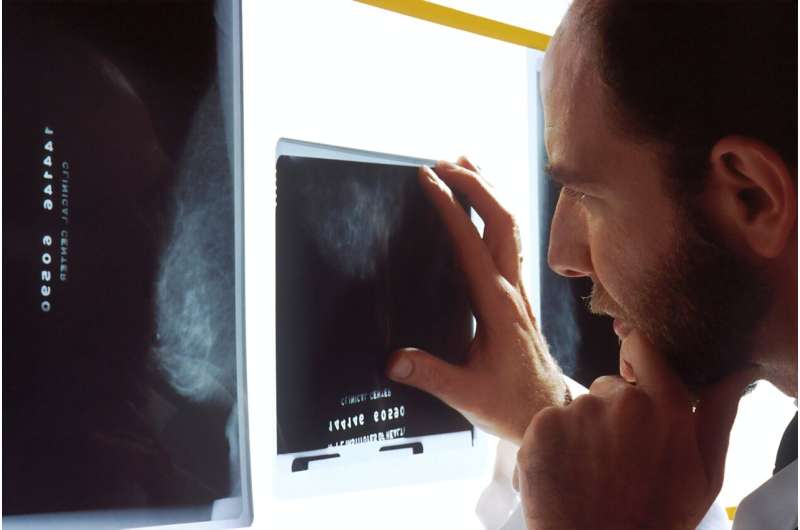
An artificial intelligence (AI) system that combines breast cancer tissue images with molecular marker data achieves high accuracy in diagnosis, tumor classification, and survival prediction. Details of the research are reported in the International Journal of Data Mining and Bioinformatics.
A common limitation of breast cancer care is that medical imaging and molecular markers as well as hormone receptor status are usually analyzed separately. The researchers suggest that this can reduce the effectiveness of early detection, subtype classification, and personalized treatment planning. Their new study addresses this issue.
In testing, the system achieved an accuracy of 96.3% and an F1 score of 0.95, a measure that balances precision and recall. The system could also successfully classify eight breast cancer subtypes, with accuracy remaining above 90% across all categories.
The approach combines two forms of AI. A Vision Transformer (ViT), a deep-learning model that identifies patterns across entire images, extracts features from biopsy slides. A fully connected neural network (FCNN) analyzes molecular marker data. The resulting information is combined to give a clearer diagnosis.
The team says the method improves on many existing AI systems, which usually focus on image analysis and overlook molecular information that influences tumor behavior and treatment response. The model also incorporates clinical data regarding survival trends and so can help support treatment decisions.
More information
Yanping Zhang et al, Establishment of artificial intelligence pathological feature diagnosis model and molecular mechanism, International Journal of Data Mining and Bioinformatics (2026). DOI: 10.1504/ijdmb.2026.153894
Key medical concepts
Clinical categories
The content is provided for information purposes only.