

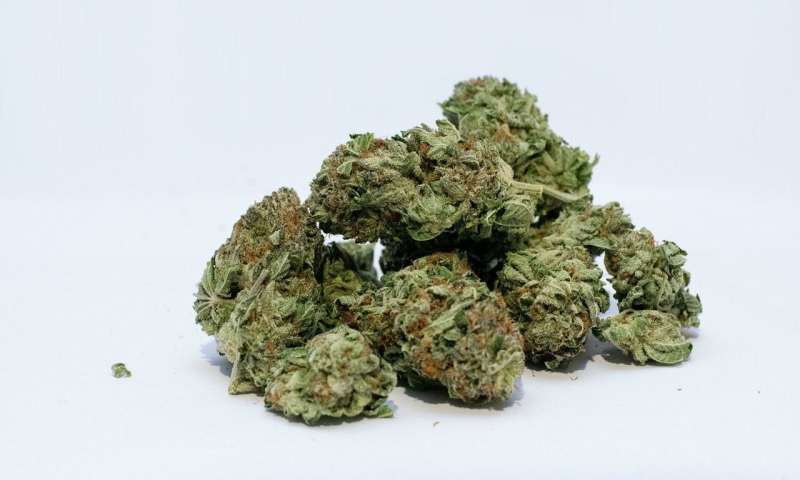
Removing criminal penalties for possessing cannabis for personal use, or introducing tightly controlled legalization of cannabis, does not appear to increase levels of cannabis use. However, the commercial sale of cannabis is linked to increased health risks, with large-scale for-profit markets—such as those seen in the U.S. and Canada—resulting in more potent products and higher rates of addiction.
These findings are reported in a study published in The Lancet Psychiatry led by experts in addiction and mental health at the University of Bath in the U.K., together with an international team from the Americas, Europe, Africa, Australia, New Zealand and Asia.
Co-authors Professor Tom Freeman and Dr. Rachel Lees Thorne, both from the Department of Psychology at Bath, say their findings highlight the distinct effects of different policy approaches globally.
Evolving policies around the world
Cannabis policies are rapidly evolving worldwide. Today, they range from strict prohibition to fully commercialized legalization. The new paper examines global changes in cannabis policy between 2000 and 2025, and how these are linked to changes in cannabis use, cannabis addiction and other psychiatric disorders.
In the U.K., cannabis is a Class B controlled drug, with a maximum penalty for possession of up to five years in prison, an unlimited fine, or both. A 2025 report by the London Drugs Commission, commissioned by London Mayor Sadiq Khan and titled “The Cannabis Conundrum: a way forward for London,” proposed decriminalizing possession of cannabis for recreational use.
Such a change could shift the focus from managing cannabis through criminal law enforcement to health care, and address the disproportionate level of cannabis policing found in Black communities. The findings of this new global analysis indicated that when other countries had decriminalized cannabis, there was little evidence of changes in cannabis use.
Other countries have gone a step further by legalizing cannabis. The first country in the world to do this was Uruguay, which today has a tightly controlled approach where adults can access a restricted range of cannabis products from pharmacies (with limits on their potency) as well as cannabis social clubs, or by growing cannabis themselves.
In Uruguay, along with other contexts in which cannabis legalization is tightly controlled, there is little evidence of changes in cannabis use.
By contrast, in many U.S. states and in Canada, cannabis is legally sold through well-established, for-profit markets, making cannabis widely available. In these commercialized legal markets, use of the drug has increased. Cannabis potency has also increased since the legalization of commercial sales, along with rates of addiction among adults, characterized by people struggling to stop using the drug despite negative effects on daily life.
Freeman said, “In a rapidly changing global cannabis policy landscape, it is increasingly important to ask how policy will change, rather than if it will change at all. The type of policy change is critical.
“We found little evidence for changes in use after decriminalization or tightly controlled legalization. By contrast, in Canada and the U.S., policy changes have been more substantial through commercialized legalization, which have increased sales and consumption.
“There are now more daily consumers of cannabis than daily consumers of alcohol in the U.S. What followed commercialized legalization was a rise in cannabis addiction as well as increases in hospital admissions for psychosis, including cases where psychotic disorders occurred alongside cannabis addiction.
“The emergence of a for-profit cannabis industry can result in commercial interests being prioritized over public health—just as we have seen with the alcohol and tobacco industries. Increased availability of cannabis products, greater product strength and active marketing of these products can increase the risk of harm.
“Alternative policies—such as decriminalization or strictly regulated legalization—can remove the harms of criminalizing people who use cannabis, while limiting changes in use.”
Medical cannabis
The researchers found that poorly regulated access to medical cannabis, particularly in the absence of clear evidence on its safety and effectiveness, may also increase the risk of harm to people’s health.
The Advisory Council on the Misuse of Drugs is currently reviewing evidence on the impact of the U.K.’s 2018 legalization of medical cannabis, including whether it has achieved its desired aims and whether there have been unintended consequences.
Freeman said, “As global cannabis policies continue to evolve, we need to do more to track their impact—particularly in countries outside of the U.S. and Canada, where fewer studies are conducted.”
The new review is part of a collection of papers on cannabis published in The Lancet Psychiatry and led by the University of Bath in collaboration with international partners.
Cannabis products and mental illness
The second review finds evidence that daily cannabis use can act with other risk factors to increase the risk of psychosis, but its role in depression, anxiety and risk of suicidal thoughts or suicide was less clear.
The third paper synthesizes evidence from clinical trials into the use of medical cannabinoids (the active ingredients in cannabis) for the treatment of psychiatric disorders.
Though there is a growing trend to prescribe these substances to treat mental health and substance-use disorders, the researchers found little strong evidence of their effectiveness on the basis of the available evidence from clinical trials.
Across 54 trials, limited benefits were found: Cannabinoids modestly reduced cannabis withdrawal and use, improved sleep in insomnia, and helped with tics and some autism traits. But they also increased cocaine craving in people with cocaine use disorder and showed no meaningful effect on anxiety, PTSD, psychosis or opioid dependence. There were no trials for the treatment of depression.
Publication details
International cannabis policies and their association with cannabis use, cannabis use disorder, and other psychiatric” disorders, The Lancet Psychiatry (2026). DOI: 10.1016/S2215-0366(26)00087-8
Journal information:
The Lancet Psychiatry
The content is provided for information purposes only.