

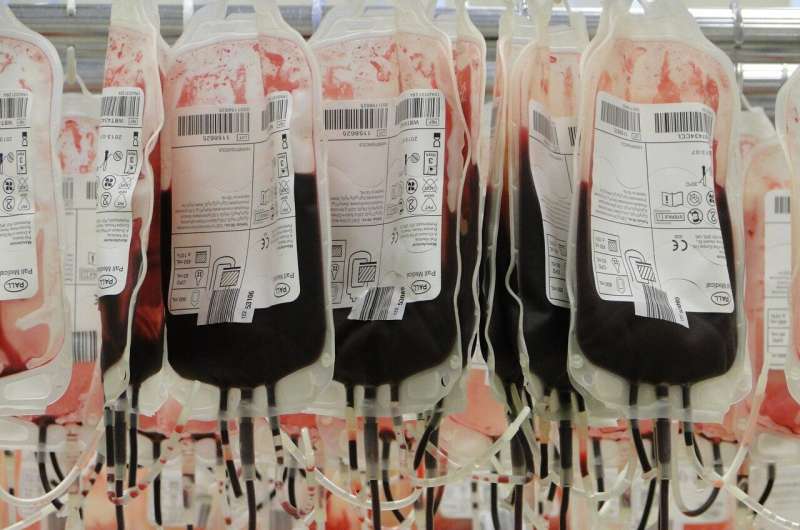
In medical emergencies, timely access to blood can mean the difference between life and death. Managing supply in rural communities is a major challenge, but Simon Fraser University researchers say part of the solution may be in the math.
Working with health authorities and laboratory technologists across British Columbia, the SFU-led research team recently built a new simulation model to help hospitals make more informed decisions about how much blood to order and when. The work is published in the journal Transfusion Medicine.
“Each unit of blood represents a volunteer who took time out of their day to save a life,” said Jas Dhahan, lead researcher and model developer. “We have a responsibility to safeguard that altruistic resource and ensure patients in rural or remote communities have the same access to life-saving blood products as those who live close to major trauma centers.”
Moving blood through ‘hubs and spokes’
Donor blood is distributed throughout British Columbia and Yukon using hub-and-spoke networks. The hubs include Canadian Blood Services (CBS) in Vancouver and the largest hospitals within British Columbia’s five regional health authorities. Larger hospitals receive their blood supply directly from CBS.
Smaller hospitals are the spokes of the network and order blood inventory from CBS or the nearest hub hospital. Ten days before a unit of blood expires, they return it to the hub hospital, where it’s more likely to be used, and then order new blood.
This system has significantly reduced wastage due to expired units. But local hospitals often rely on isolated ordering histories that can have unintentional ripple effects across the entire system, said Sandy Rutherford, scientific director at SFU’s Centre for Operations Research and Decision Sciences (CORDS).
“In a province as large and geographically challenging as B.C., moving blood or patients quickly isn’t always possible. Blood that isn’t being used in one hospital means it’s also out of circulation for other hospitals that may need it,” he said.
Testing evidence-based ordering policies
Researchers interviewed laboratory technologists responsible for ordering blood at hospitals across B.C., focusing on O-negative blood. They looked at inventory-to-utilization ratios (how much O-negative blood is stocked versus transfused), wastage due to expiry and how often spoke hospitals place orders.
The team then built a digital twin simulation of the province’s hub-and-spoke network, which hospitals could use to test different ordering policies under real-world scenarios.
Blood distribution is a high-stakes system, particularly with O-negative blood, Dhahan said. This model “helps identify optimal inventory targets so hospitals can meet local demand while supporting a more equitable system overall.”
O-negative is the only blood type that can be transfused into anyone, making it the safest choice in emergencies when there is no time to determine a patient’s blood type. About 7% of the Canadian population is O-negative, yet that blood type accounts for roughly 12.5% of all transfusions nationwide.
“With a shelf life of 42 days, there is a natural strain on this particularly precious resource,” said Douglas Morrison, medical director of the BC Provincial Blood Coordinating Office. “You don’t want to run out if you need it. But if you order too much, it’s sitting unused and could expire.”
More information
Jasdeep Dhahan et al, Red blood cell inventory management: Insights from transfusion laboratory technologists in British Columbia, Canada, Transfusion Medicine (2025). DOI: 10.1111/tme.13131
Key medical concepts
Clinical categories
The content is provided for information purposes only.