

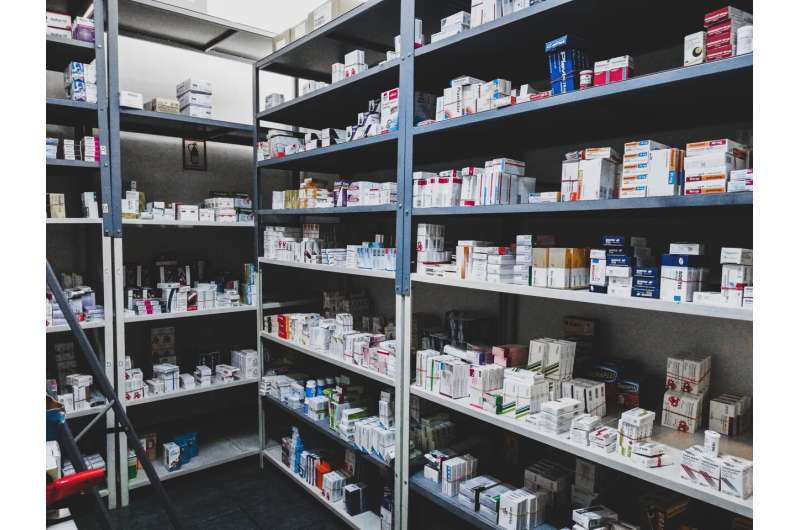
The U.K.’s supply of essential medicines is in a fragile state, with a “vicious cycle” where rising costs and supply chain issues are making it harder for patients to get the treatments they need, according to a new House of Lords report. Dr. Emilia Vann Yaroson has provided evidence to a Public Services committee and the subsequent House of Lords report, titled “Medicines security—a national priority.”
The committee found that medicine shortages in the U.K. have become a “new normal” of rising shortages, a vicious cycle of high manufacturing costs and global supply chain disruptions and generic drugs at risk because profit margins are so thin that companies simply stop making them if costs rise.
These shortages aren’t just an administrative headache; they have real-world consequences for patients, pharmacists and GPs. Patients often have to visit multiple pharmacies to find their medication or settle for alternatives that may not work as well for them. There is also the effect of burnout for staff with pharmacists and GPs spending hours every week chasing stock instead of treating patients.
The House of Lords is calling for a national strategy to fix these issues. Their main suggestions include:
- Better Data—the government needs to improve how it tracks medicine stocks so they can spot a shortage before it happens, rather than reacting once the shelves are empty.
- Reviewing Tax and Pricing—the report suggests that current tax rules (specifically the “VPAG” scheme) might be accidentally driving medicine providers out of the U.K. They want a review to ensure the U.K. remains a competitive place to sell drugs.
- Support for U.K. Manufacturing—to reduce reliance on overseas factories (like those in China or India), the U.K. should invest more in its own ability to manufacture essential ingredients and finished medicines.
- Empowering Pharmacists—the committee suggests giving pharmacists more flexibility to substitute medications or change dosages without needing to send the patient back to their GP for a new prescription.
- Unified definition of shortages—different pockets of data that are inoperable
- Data and information sharing—updated infrastructure and interoperability would be required to build resilience and enhance medicine security.
The report concludes that the U.K. cannot afford to be complacent. It argues that the government must treat medicine supply as a matter of national security, ensuring that the NHS has a stable, predictable, and resilient flow of drugs to keep the public healthy.
Watch the Parliamentary Public Services Committee recording.
More information
Medicines security—a national priority. sheffield.ac.uk/media/115276/download?attachment
Key medical concepts
Clinical categories
The content is provided for information purposes only.