

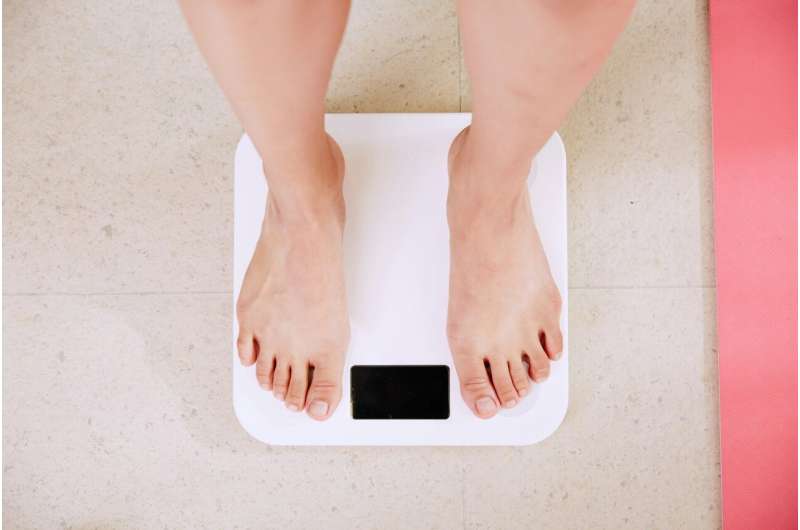
Researchers have quantified the role of obesity in common long-term conditions, showing for the first time the effect of losing weight in preventing multiple diseases.
Mapping overlapping long-term conditions
Conditions that often occur together may share an underlying cause, which can be key to prevention or treatment. The picture of which conditions co-occur is complex, so researchers paired them together, to allow them to identify shared causes more simply. The study found that obesity is the main shared cause between 10 pairs of commonly occurring conditions.
The research specifically measured how much weight reduction would reduce the risk of the next diagnosis. In the largest study of its kind, published in Communications Medicine, the team led by the University of Exeter Medical School studied 71 conditions which often occur together, such as type 2 diabetes and osteoarthritis, or kidney disease and chronic obstructive pulmonary disease (COPD).
The GEMINI study used genetics and health care data drawn from a number of large datasets internationally. They found that obesity was part of the cause for 61 of the 71 conditions. They also found that obesity explained all of the genetic overlap in ten pairs of conditions, suggesting it is the main driver for why they frequently occur together.
Quantifying risk reduction through BMI change
Body mass index, or BMI, is a scaled measure of weight—a number over 30 units indicates obesity, while less than 25 indicates “normal” weight. The study quantified how much a reduction in BMI would reduce the risk of both conditions at a population level for people overweight or living with obesity. For example, for every thousand people who have both chronic kidney disease and osteoarthritis, a BMI reduction of 4.5 units would have prevented 17 of them developing both conditions or nine people per thousand with type 2 diabetes and osteoarthritis.
The team also established the pairs of conditions where obesity is not the main cause and are now investigating other mechanisms.
Study lead Professor Jack Bowden, at the University of Exeter Medical School, said, “We’ve long known that certain diseases often occur together, and also that obesity increases the risk of many diseases. This largescale study is the first to use genetics to quantify the role of obesity in causing diseases to occur in the same individuals.
“We found that for some disease pairings, obesity is the major driving force. Our research provides much more detail about the links between obesity and disease, which will help clinicians target specific advice to patients going forward.”
Implications for public health
Study author Professor Jane Masoli, of the University of Exeter Medical School, who is a Consultant Geriatrician and regional NIHR Aging lead, said, “Currently nine million people in the UK live with two or more long-term conditions. Understanding how to prevent diseases accumulating is a key national research and health care priority.
“This study further strengthens the case to tackle obesity through public health programs, reinforcing the importance of lifelong obesity management in the NHS strategy on prevention. Our work shows that this could reduce the risk of accumulating multiple health conditions, supporting people to live longer, healthier lives.”
This research represents another important publication from the GEMINI (Genetic Evaluation of Multimorbidity towards INdividualization of Interventions) collaborative. Led by the University of Exeter, GEMINI includes people with multimorbidity, health care professionals, including those in primary care and experts in statistics and genetics.
The GEMINI team are working to further understand why some conditions more frequently co-occur in the same patients. The team are quantifying the role of other, known modifiable risk factors beyond obesity, and are finding novel genes and pathways that could point to new ways to intervene and improve health.
Publication details
Genetics identifies obesity as a shared risk factor for co-occurring multiple longterm conditions, Communications Medicine (2026). DOI: 10.1038/s43856-025-01347-y
GEMINI data, results, and code are free to download, and the pairwise genetic and observational correlations can be viewed interactively.
Journal information:
Communications Medicine
The content is provided for information purposes only.