

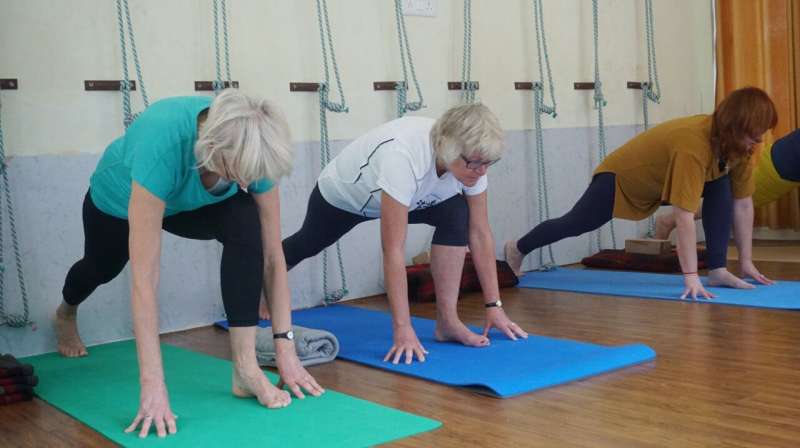
The powerful role of exercise in maintaining skeletal muscle could be the key to improving health and resilience in older age, according to new research from Monash University. The new research, published on the bioRxiv preprint server, used preclinical models to uncover the key role a protein found in skeletal muscle, NOX4, plays in this process.
Physical activity is one of the most powerful ways to combat biological aging, which is the way our organs and tissues decline as we get older. Physical activity and NOX4 naturally decline as we age, making it more difficult to achieve the health and anti-aging benefits of exercise.
The research shows that lower levels of NOX4 are associated with muscle wasting and frailty, while restored levels are linked to better-regulated metabolism and improved muscle mass and strength.
Senior author Professor Tony Tiganis, from Monash Biomedicine Discovery Institute, said finding alternate ways to trigger the same responses in skeletal muscle could help people retain muscle mass and strength when NOX4 declines with age.
“Our findings could present a significant new target for therapies that would drastically improve life for many older people,” Tiganis said. “If we can find other ways to mimic the processes started by NOX4, we could successfully combat biological aging and improve health span. So perhaps there is some truth to the old adage, ‘you are only as old as you feel.'”
This research builds on previous work by Professor Tiganis and his team, led by Monash research fellow Dr. Chrysovalantou Xirouchaki, which found that NOX4 acts as a signal to muscles to release oxygen-rich molecules that help cells adapt, improve energy production, reduce damage and maintain overall health.
Xirouchaki said the next step would be to identify “downstream” (subsequent) cellular signals triggered by NOX4 that could be replicated.
“We aim to harness naturally occurring compounds from cruciferous vegetables such as broccoli, cabbage and Brussels sprouts to restore this pathway, potentially replicating some of the health benefits of exercise during aging,” Xirouchaki said.
Publication details
Chrysovalantou E. Xirouchaki et al, A decline in skeletal muscle NOX4 abrogates adaptive homeostasis and exacerbates ageing, bioRxiv (2026). DOI: 10.64898/2026.03.27.714615
Journal information:
bioRxiv
The content is provided for information purposes only.