

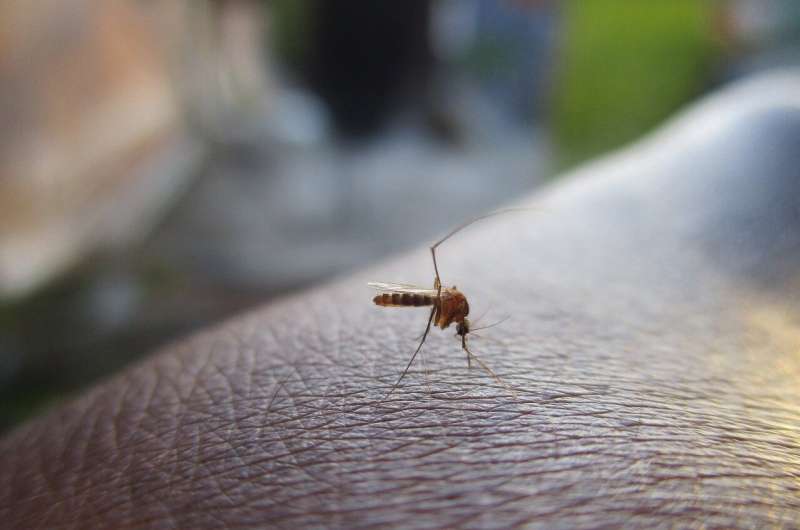
Dengue is a mosquito-borne virus affecting millions of people each year, with symptoms ranging from flu-like illness to severe bleeding and organ failure. Scientists are now using Wolbachia, a naturally occurring bacteria found in many insects, to turn disease-carrying mosquitoes into unlikely allies through Project Wolbachia–Singapore.
In a two-year-long citywide experiment in Singapore, researchers divided urban neighborhoods into clusters, releasing sterile, Wolbachia-infected Aedes aegypti male mosquitoes in some areas while leaving others untreated to test whether this biological approach could reduce disease transmission in a densely populated city.
The mosquito releases proved to be quite effective. In areas where the intervention was used, mosquito numbers fell sharply, and the people living in treated neighborhoods were about 70% less likely to develop symptomatic dengue after a few months of exposure. The findings are published in The New England Journal of Medicine.
Turning the problem into a solution
Traditional mosquito-control methods, such as removing breeding sites and using mosquito repellents, may work in the short term but often fail to deliver lasting reductions in dengue cases or infections. Chemical-based repellents also pose risks, as they can affect human health, harm biodiversity, and disrupt the surrounding environment.
Over the past few years, scientists have discovered that infecting Aedes aegypti mosquitoes with Wolbachia bacteria can be a powerful alternative to traditional dengue control methods. Wolbachia prevents the dengue virus from replicating inside these mosquitoes, making them far less capable of spreading the disease.
Project Wolbachia works by releasing male Aedes mosquitoes that carry Wolbachia. Although male mosquitoes do not bite humans, they play an important role in reducing the population of biting mosquitoes that transmit dengue.
When these infected males are released to mate with wild female mosquitoes that do not carry Wolbachia, the eggs they produce do not hatch. Over time, repeated releases result in fewer mosquitoes surviving in the city. This specific strategy is known as the Wolbachia-mediated incompatible insect technique–sterile insect technique (IIT-SIT).
While the IIT-SIT method has shown early promise in reducing mosquito populations, there is a lack of randomized controlled trial data to confirm its effectiveness in reducing dengue infections in people.
Tracking the dengue-prevention impact
For this study, researchers bred sterile male Aedes aegypti mosquitoes infected with Wolbachia in the laboratory. They then selected 15 large residential areas in Singapore and randomly divided them into two groups. Eight clusters received twice-weekly releases of the Wolbachia-infected sterile males, while seven clusters served as controls and received no mosquito releases. This continued for 24 months, from mid-2022 to late 2024.
To assess whether the releases had any effect, researchers tracked two outcomes: the mosquito population and the number of dengue diagnoses.
First, they used specialized devices to capture and count wild female mosquitoes, allowing them to track changes in mosquito populations. Second, they analyzed national health databases to identify residents who visited doctors and tested positive for dengue and compared dengue infection rates in areas with mosquito releases with those without releases.
In the areas where the mosquitoes were released, the number of wild female mosquitoes declined by ~77%—from 0.18 to 0.041 mosquitoes per trap. This drop went hand in hand with fewer dengue infections, where after six months or more, only 6% of people in the intervention areas tested positive, compared with 21% in the control areas.
Overall, exposure to Wolbachia-carrying mosquitoes cut the risk of dengue by roughly 71–72% over three to 12 months.
The results are encouraging, and the researchers believe this technology could complement traditional mosquito-control methods and vaccines to further control transmission of dengue and other diseases carried by Aedes mosquitoes.
Written for you by our author , edited by Sadie Harley, —this article is the result of careful human work. We rely on readers like you to keep independent science journalism alive.
If this reporting matters to you,
You’ll get an ad-free account as a thank-you.
Publication details
Jue Tao Lim et al, Dengue Suppression by Male Wolbachia-Infected Mosquitoes, New England Journal of Medicine (2026). DOI: 10.1056/nejmoa2503304
Journal information:
New England Journal of Medicine
The content is provided for information purposes only.